
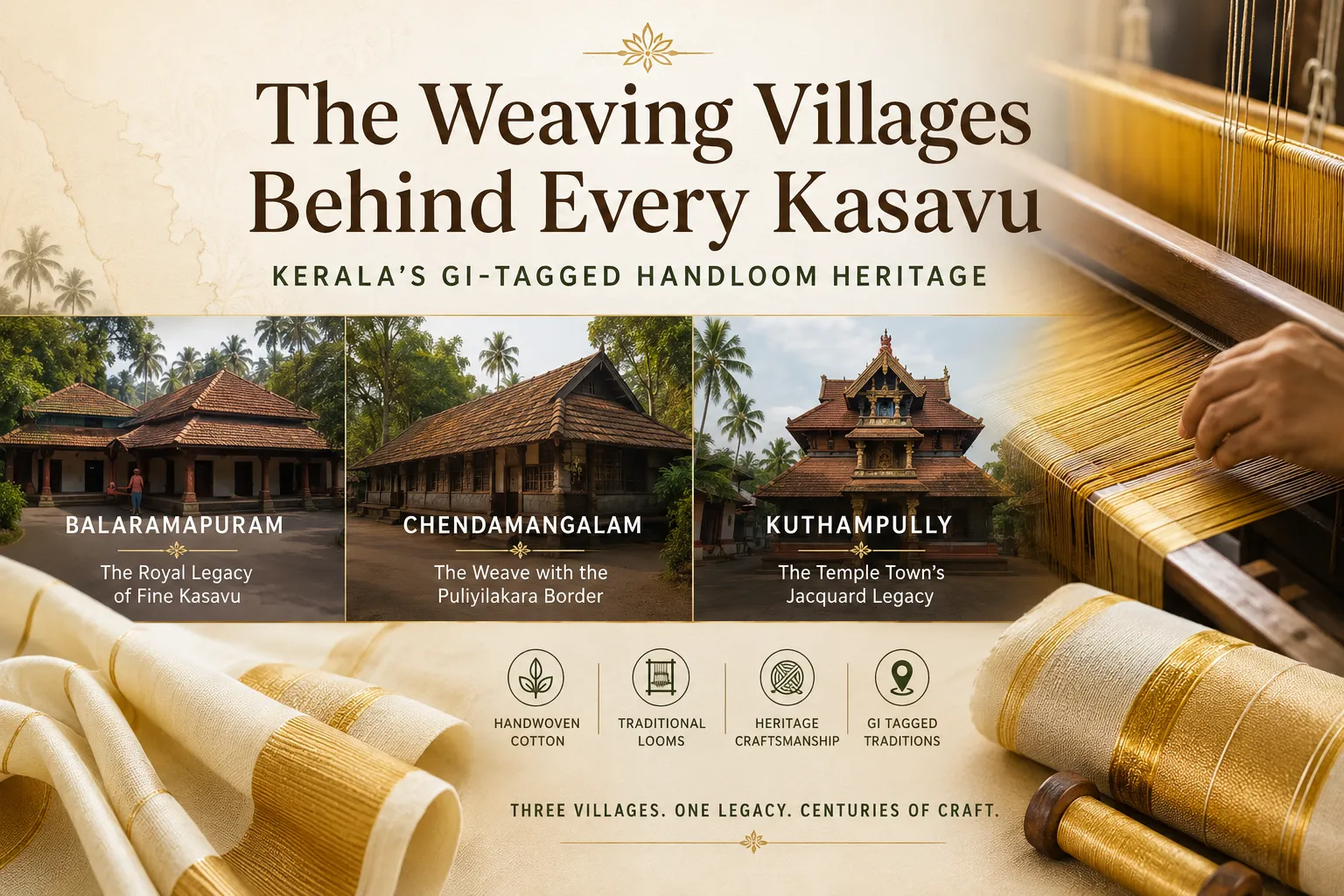
The Weaving Villages Behind Every Kasavu: Balaramapuram, Chendamangalam & Kuthampully
When you wear a Kasavu saree or mundu, you wear more than a beautiful piece of clothing. You wear the skill of generations of weavers, the pride of Kerala’s handloom tradition, and a heritage that has survived for centuries. Every golden border tells a story that begins long before the fabric reaches a store.
Many people admire the elegance of Kasavu but never ask where it comes from. Behind every authentic weave are villages where families have dedicated their lives to preserving this craft. Their knowledge has passed from one generation to the next, making Kasavu one of Kerala’s most respected textile traditions.
Today, Kerala has three famous handloom clusters with an official Geographical Indication (GI) tag for their Kasavu weaving tradition: Balaramapuram, Chendamangalam, and Kuthampully. A GI tag protects products that are closely connected to a specific place, similar to how Champagne belongs only to a particular region in France. This recognition helps preserve the originality, craftsmanship, and cultural identity of Kerala’s traditional handloom industry.
In this article, we explore these three historic weaving villages and discover why their craftsmanship continues to inspire authentic khadi clothing, including the timeless designs created by Khadigram.
Balaramapuram: The Birthplace of Kerala’s Finest Kasavu
Balaramapuram is one of Kerala’s oldest and most respected weaving villages. Located near Thiruvananthapuram, it has been producing authentic Kasavu fabrics for more than two centuries. The village remains a symbol of quality, simplicity, and traditional craftsmanship.
A Royal Beginning
The history of Balaramapuram dates back to the 18th century during the rule of the Travancore Kingdom. The royal family invited skilled weaving families from the Shaliar community, originally from Tamil Nadu, to settle in the village. Their responsibility was to weave garments for the royal household, temple priests, and important religious ceremonies.
Over time, these skilled artisans perfected the art of weaving ivory-white cotton fabric with elegant zari borders. Their work became the foundation of what people across Kerala now recognise as the traditional Kasavu mundu and Kasavu saree.
Beauty in Simplicity
Unlike many decorative textiles, Balaramapuram Kasavu stands out because of its simplicity. The beauty comes from clean white cotton, fine weaving, and a graceful gold border rather than colourful patterns or heavy embroidery.
Traditional Balaramapuram fabrics were woven using fine cotton yarn, often between 100s and 120s thread count. Skilled artisans used pure zari made from silver thread coated with gold, creating a rich yet elegant finish that became closely associated with Kerala’s cultural identity.
Every fabric was woven on traditional pit looms without powered machinery. The weaving process depended entirely on the experience and patience of the artisan, making every piece unique.
A Protected Heritage
In 2009, Balaramapuram Kasavu received its official GI (Geographical Indication) certification. This recognition protects the identity of the weave and confirms that authentic Balaramapuram Kasavu can only come from this historic weaving village using its traditional methods.
The GI tag does more than protect a name. It also preserves the livelihood of weaving families and ensures that future generations can continue Kerala’s rich handloom tradition.
Chendamangalam: A Village That Wove Its Own Identity
Located near Paravur in the Ernakulam district, Chendamangalam has built a unique identity within Kerala’s handloom heritage. While it shares the same respect for traditional weaving as Balaramapuram, its fabrics developed their own distinctive style, techniques, and cultural significance.
From the Gates of Paliam Palace
Local history connects Chendamangalam’s weaving tradition with the influential Paliam family, who served as hereditary chief ministers to the Rajas of Cochin.
According to local tradition, a skilled weaver from the Chaliyan community presented an exceptional piece of handwoven cloth at Paliam Palace. The quality of that fabric impressed the royal household and helped establish Chendamangalam as an important centre for handloom weaving. Over the years, weaving became a way of life for many families in the region.
The Signature Puliyilakara Border
Chendamangalam developed a weaving style that looks noticeably different from Balaramapuram’s understated elegance.
Its most recognised feature is the Puliyilakara border, a delicate black line woven along the edge of the fabric. Many designs also include colourful borders, matching stripes, checks, and extra-weft patterns that add character without losing the traditional Kerala aesthetic.
Besides Kasavu sarees, the village is also known for producing the classic Settu Mundu, Kerala’s traditional two-piece saree, along with the everyday Thorthu, a handwoven cotton towel widely used across the state.
One of the most remarkable parts of Chendamangalam’s weaving process happens before weaving even begins. The cotton yarn is soaked and softened through a traditional foot-stamping process that continues for several days. This careful preparation improves the texture of the yarn and became one of the reasons the village earned its prestigious GI recognition.
Kuthampully: Where Temple Traditions Live Through Every Weave
Located near Thrissur, Kuthampully is one of Kerala’s most celebrated handloom villages. For nearly 500 years, this village has preserved a weaving tradition that blends craftsmanship, culture, and devotion. Today, Kuthampully is known across India for producing elegant Kasavu sarees with beautifully woven motifs.
A Legacy Built Around Temples
The weaving history of Kuthampully began when families from the Devanga Chettiar community migrated from Mysore under the patronage of the Kochi royal family. They settled near temples and dedicated their skills to weaving garments for temple rituals, royal households, and religious ceremonies.
Over generations, these artisans refined their techniques while preserving the traditional methods that made their fabrics unique. Their contribution to Kerala’s handloom heritage earned Kuthampully its official GI (Geographical Indication) tag in 2011.
The Beauty of Jacquard Weaving
Kuthampully developed a design style that is instantly recognisable. Unlike the simple elegance of Balaramapuram or the distinctive borders of Chendamangalam, Kuthampully became famous for its intricate jacquard weaving.
Artisans weave temple-inspired motifs into the borders and pallu, creating detailed patterns that reflect Kerala’s cultural heritage. These sarees often use half-fine zari, making them both elegant and practical while maintaining their traditional appearance.
Every motif tells a story of Kerala’s temples, festivals, and artistic traditions. Even today, many people choose Kuthampully Kasavu for weddings, temple visits, and important family celebrations because of its timeless beauty and cultural value.
One Tradition, Three Unique Weaving Villages
Although Balaramapuram, Chendamangalam, and Kuthampully each have their own identity, they share the same values that define Kerala’s authentic handloom tradition.
Every village follows a process built on patience, skill, and respect for craftsmanship. The fabrics are created using hand-spun or carefully hand-processed cotton yarn, woven on traditional looms instead of mass-production machines. Their work continues through weaving cooperatives that support artisan families rather than factory-based manufacturing.
This shared philosophy also connects naturally with the values of khadi. Both Kasavu and khadi celebrate slow craftsmanship, handmade quality, and sustainable production. Their value comes from the people who weave them—not from speed, volume, or machinery.
When you choose authentic handloom clothing, you help preserve centuries of knowledge that still lives in these weaving communities.
Kasavu: More Than Festival Wear
Many people associate Kasavu only with weddings or Onam celebrations. In reality, it holds a much deeper place in Kerala’s culture and everyday life.
A Symbol of Prosperity During Vishu
During Vishu, Kerala’s traditional New Year, a fresh Kasavu cloth is placed beside the Vishukkani, the ceremonial arrangement viewed at the start of the day. It represents prosperity, purity, and hope for the year ahead.
This simple tradition reflects the respect Kerala families have shown for Kasavu over generations.
Worn for Life’s Most Meaningful Moments
Kasavu continues to be an important part of many occasions across Kerala. People wear it during weddings, temple visits, cultural events, religious festivals, family celebrations, and other memorable moments.
Its timeless appearance has allowed it to remain relevant across generations. Rather than following changing fashion trends, Kasavu continues to represent Kerala’s identity, elegance, and tradition.
Why Knowing the Origin of Kasavu Matters
Today, many fabrics sold as “Kasavu” are produced on power looms using faster manufacturing methods. While they may look similar from a distance, they do not carry the same craftsmanship, heritage, or identity as authentic handloom Kasavu.
Understanding the unique characteristics of Kerala’s three GI-tagged weaving villages helps you recognise genuine craftsmanship.
- Balaramapuram is known for its fine cotton, elegant simplicity, and traditional pure zari borders.
- Chendamangalam stands out with its famous Puliyilakara border, colourful stripes, and carefully prepared handloom yarn.
- Kuthampully is recognised for its detailed jacquard motifs inspired by Kerala’s temple traditions.
Knowing these differences allows you to appreciate the skill behind every authentic weave instead of choosing a fabric based only on appearance or price.
How Khadigram Celebrates Kerala’s Weaving Heritage
At Khadigram, we believe every handcrafted fabric carries a story worth preserving. While we do not claim to produce the GI-tagged weaves of Balaramapuram, Chendamangalam, or Kuthampully, their craftsmanship inspires our approach to designing timeless khadi clothing.
Our Kasavu-inspired khadi collection reflects the same values that have defined Kerala’s weaving tradition for centuries—simplicity, authenticity, quality, and respect for handmade craftsmanship. From the soft feel of premium cotton to elegant gold-toned borders and clean, minimal designs, every detail is chosen to honour Kerala’s cultural heritage.
We create clothing that feels at home during Onam celebrations, Vishu, weddings, temple visits, cultural events, and family gatherings. Instead of following short-lived fashion trends, our designs focus on timeless elegance that can be worn and cherished for years.
When you choose Khadigram, you are choosing more than a garment. You are supporting the spirit of Indian handloom, celebrating skilled artisans, and helping keep traditional craftsmanship relevant for future generations.
How to Care for Your Kasavu Khadi
Authentic handloom deserves thoughtful care. With a few simple steps, you can preserve the beauty of your Kasavu-inspired khadi and keep its elegant finish looking its best for years.
Wash Gently
Hand wash your garment separately in cold water during the first few washes. This helps protect the fabric and reduces the chance of the zari border losing its natural shine.
Dry in the Shade
Avoid drying Kasavu clothing under direct sunlight. Drying it in the shade helps preserve both the cotton fibres and the gold-toned border.
Iron with Care
Use a low heat setting while ironing. Place a thin cotton cloth over the zari border before ironing to protect its finish and prevent unnecessary wear.
Store It Properly
Fold the garment neatly with the zari border facing inward. This reduces friction, protects the border from tarnishing, and helps maintain the garment’s appearance over time.
Every Thread Carries a Legacy
The beauty of Kasavu lies in more than its golden border. It lives in the villages that have protected this craft for centuries, the families who continue to weave with patience and pride, and the traditions that connect every generation to Kerala’s rich cultural heritage.
Balaramapuram, Chendamangalam, and Kuthampully each tell a different chapter of the same story. Together, they remind us that authentic handloom is not created by machines—it is created by skilled hands, timeless knowledge, and a deep respect for tradition.
As modern fashion continues to evolve, these weaving communities show us that true craftsmanship never goes out of style. Every authentic Kasavu weave reflects quality, heritage, and a commitment to preserving one of Kerala’s greatest cultural treasures.
At Khadigram, this heritage inspires everything we create. Our Kasavu-inspired khadi clothing is designed to celebrate Kerala’s weaving traditions while meeting the needs of today’s generation. Whether you wear it for Onam, Vishu, a wedding, a temple visit, or a special family occasion, you become part of a story that has been woven for centuries.
When you choose handcrafted khadi, you do more than wear beautiful clothing—you help preserve a living tradition, support artisan communities, and ensure that the legacy of Kerala’s weaving villages continues for generations to come.
Explore Khadigram’s Kasavu-inspired khadi collection and experience the timeless elegance of Kerala’s handloom heritage. Every weave reflects the values of simplicity, craftsmanship, and authenticity that have defined Kerala’s weaving villages for centuries.