
Can Kerala Khadi Compete in Global Markets? Opportunities, Challenges and the Future
Kerala Khadi stands at a defining moment. As consumers across the world embrace sustainable fashion, ethical production and handcrafted textiles, the demand for authentic fabrics continues to grow. At the same time, Kerala’s centuries-old weaving traditions, skilled artisans and eco-friendly production methods offer a compelling answer to this global shift. However, heritage alone cannot guarantee international success. Kerala Khadi must combine craftsmanship with quality standards, branding, digital transformation and export readiness to compete in an increasingly demanding global marketplace.
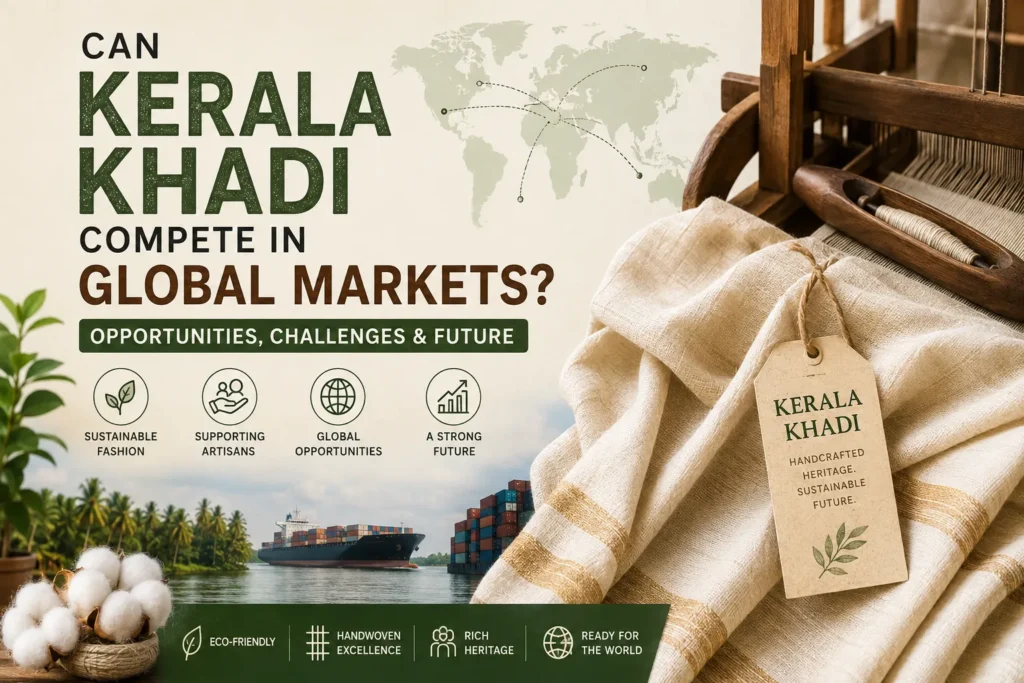
Global fashion is undergoing a significant transformation. Consumers no longer choose clothing based solely on style or price. Instead, they increasingly evaluate how a garment is produced, where its materials originate and whether the production process respects both people and the environment. Consequently, sustainable fashion has evolved from a niche movement into one of the most influential trends shaping the global apparel industry.
This shift presents an unprecedented opportunity for Kerala Khadi. Unlike mass-produced textiles, Khadi embodies craftsmanship, sustainability and cultural heritage. Every woven thread reflects the dedication of artisans who preserve techniques refined over generations. Moreover, Kerala’s weaving traditions, particularly those associated with regions such as Balaramapuram, demonstrate exceptional expertise that few textile-producing regions can replicate.
Nevertheless, entering global markets requires far more than exceptional craftsmanship. International buyers expect consistent quality, transparent supply chains, modern branding and reliable delivery. Therefore, Kerala Khadi must evolve while preserving its identity.
This article examines whether Kerala Khadi can compete successfully in global markets. It explores emerging opportunities, identifies the industry’s biggest challenges and outlines practical strategies that can position Kerala as a respected global destination for sustainable handcrafted fashion.
Why Global Demand for Sustainable Fashion Creates a Historic Opportunity
The fashion industry has entered an era where sustainability influences purchasing decisions more than ever before. Consumers increasingly question the environmental impact of fast fashion, excessive waste and synthetic materials. Consequently, brands that demonstrate authenticity, ethical production and environmental responsibility continue to gain worldwide attention.
Khadi naturally aligns with these expectations.
Unlike factory-produced fabrics manufactured through energy-intensive processes, Khadi relies primarily on manual spinning and weaving. This traditional production method consumes significantly less energy while supporting rural employment and preserving artisanal craftsmanship. As a result, Khadi already possesses many characteristics that modern sustainable fashion brands actively promote.
Consumer Priorities Have Changed
Today’s customers evaluate clothing differently than previous generations.
Instead of asking:
“Is this fashionable?”
many now ask:
- Who made this garment?
- Was it produced ethically?
- Does it support artisans?
- Is the fabric environmentally responsible?
- Will it last for years?
- how to care ?
Kerala Khadi can answer each of these questions with confidence.
Every handcrafted fabric carries a story that machine-made textiles simply cannot reproduce. Furthermore, this emotional connection often influences purchasing decisions in premium international markets.
Sustainability Is Becoming a Competitive Advantage
Many international brands now incorporate sustainability into their core business strategies rather than treating it as a marketing campaign.
Consequently, buyers increasingly seek suppliers who can demonstrate:
| Traditional Manufacturing | Kerala Khadi |
|---|---|
| Large-scale industrial production | Handcrafted production |
| High energy consumption | Minimal energy usage |
| Synthetic fibre dependence | Natural fibre focus |
| Standardised designs | Artisan craftsmanship |
| Limited cultural identity | Rich cultural heritage |
This comparison illustrates why Kerala Khadi occupies a unique position within the global sustainable fashion movement.
However, sustainability alone does not guarantee commercial success.
International buyers also evaluate consistency, quality assurance, packaging, certifications and supplier reliability. Therefore, Kerala Khadi must strengthen every stage of its value chain to convert sustainability into long-term export growth.
What Makes Kerala Khadi Different from Other Textile Products?
India produces Khadi across several states, each contributing distinct weaving traditions and regional identities. Nevertheless, Kerala Khadi possesses characteristics that differentiate it within both domestic and international markets.
Understanding these strengths is essential because successful global brands rarely compete on price alone. Instead, they compete through differentiation.
Rich Weaving Heritage
Kerala’s textile heritage extends back centuries.
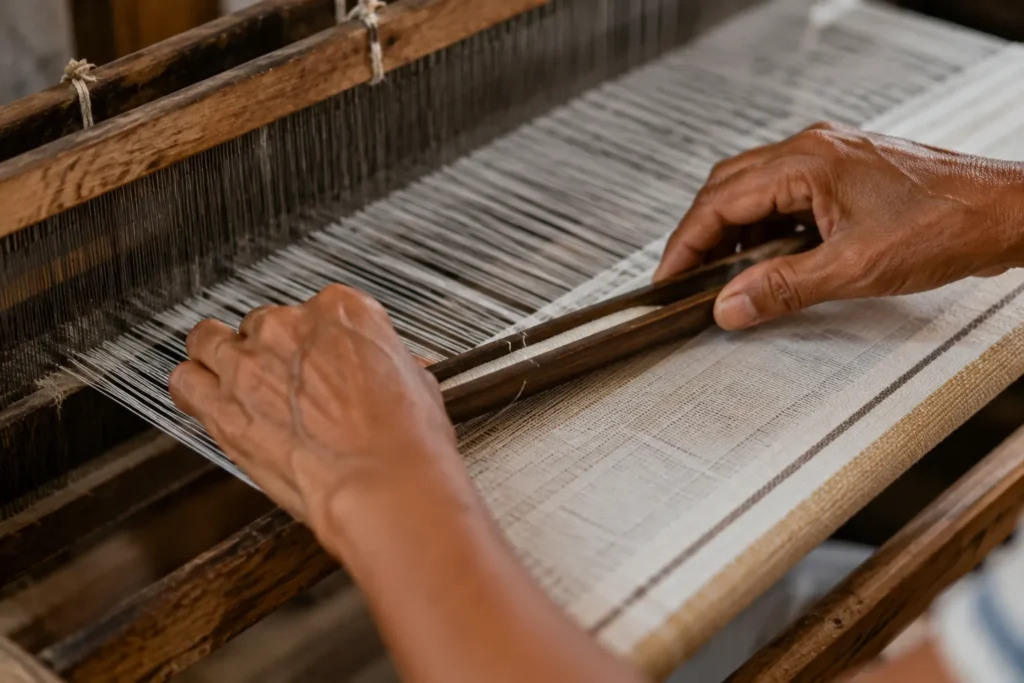
Communities across the state have preserved intricate weaving techniques despite industrialisation and changing consumer preferences. Regions such as Balaramapuram remain internationally recognised for producing fine handwoven fabrics that combine precision with durability.
This heritage creates authenticity.
Unlike artificially manufactured brand stories, Kerala Khadi reflects genuine cultural traditions that continue to thrive through skilled artisans.
Consequently, international consumers interested in heritage fashion often perceive handcrafted textiles as luxury products rather than everyday commodities.
Exceptional Climate-Friendly Fabric
Kerala’s tropical climate has influenced local weaving traditions for generations.
Artisans developed lightweight, breathable fabrics capable of providing comfort even in hot and humid weather conditions.
As global temperatures continue to rise, breathable natural fabrics become increasingly valuable.
Therefore, Kerala Khadi possesses practical advantages that extend beyond cultural significance.
Consumers in tropical and subtropical regions increasingly appreciate garments that combine comfort with sustainability.
Craftsmanship Creates Exclusivity
Mass production creates uniformity.
Handcrafted production creates uniqueness.
Every Kerala Khadi garment contains subtle variations that demonstrate genuine human craftsmanship. Rather than reducing product value, these variations often increase perceived authenticity among premium buyers.
Luxury fashion increasingly celebrates limited production, individuality and handcrafted excellence.
Consequently, Kerala Khadi naturally aligns with premium market positioning.
Natural Storytelling Enhances Brand Value
Modern consumers purchase experiences alongside products.
They appreciate knowing:
- who created the product,
- where it originated,
- why it matters,
- and how their purchase supports communities.
Kerala Khadi provides compelling answers.
Each fabric represents generations of weaving knowledge, cultural identity and sustainable production practices.
Therefore, effective storytelling can significantly increase perceived product value without changing the product itself.
Can Kerala Khadi Compete in Global Markets?
The answer is yes—but only if the industry competes strategically rather than attempting to imitate mass-produced textiles.
Kerala Khadi should never compete against low-cost manufacturing hubs.
Instead, it should compete within premium market segments where authenticity, craftsmanship and sustainability justify higher prices.
Opportunity 1: Growing Demand for Ethical Fashion
Consumers increasingly support brands that demonstrate ethical sourcing and responsible manufacturing.
This trend extends beyond Europe.
North America, Australia, Japan and several Middle Eastern markets also show increasing interest in sustainable apparel.
Kerala Khadi already satisfies many expectations associated with ethical fashion.
However, brands must communicate these strengths effectively through professional branding, transparent production information and compelling digital storytelling.
Without effective communication, international consumers may never recognise the true value behind handcrafted fabrics.
Opportunity 2: Premium Positioning Instead of Price Competition
Attempting to compete on price represents one of the biggest mistakes handcrafted industries can make.
Large-scale manufacturers possess significant cost advantages through automation and mass production.
Kerala Khadi should avoid this battle entirely.
Instead, brands should position themselves alongside premium sustainable fashion labels.
Consumers willingly pay higher prices when products demonstrate:
- superior craftsmanship,
- authentic heritage,
- environmental responsibility,
- limited production,
- and exceptional quality.
Consequently, premium positioning protects artisan livelihoods while increasing profitability.
Opportunity 3: Global Interest in Slow Fashion
Fast fashion encouraged consumers to purchase more clothing at lower prices.
However, this model increasingly faces criticism because it contributes to excessive waste and environmental damage.
As a result, slow fashion has emerged as an attractive alternative.
Slow fashion encourages consumers to purchase fewer garments with greater quality and longer lifespans.
Kerala Khadi perfectly complements this philosophy.
Rather than promoting disposable clothing, Khadi encourages mindful purchasing, durability and timeless design.
Therefore, the industry’s traditional strengths align naturally with modern consumer values.
Opportunity 4: Digital Commerce Removes Traditional Barriers
Historically, international expansion required physical retail stores or expensive distribution networks.
Today, digital commerce has changed everything.
A Kerala-based brand can now reach customers across Europe, North America and Asia through:
- professionally designed ecommerce websites,
- international marketplaces,
- digital advertising,
- search engine optimisation,
- influencer collaborations,
- and social media storytelling.
Consequently, smaller Khadi brands possess greater global opportunities than ever before.
However, digital visibility requires consistent investment in branding, photography, content marketing and customer experience.
Can Kerala Khadi Compete in Global Markets? Opportunities, Challenges and the Future
The Challenges Kerala Khadi Must Overcome
Kerala Khadi possesses exceptional craftsmanship, a rich cultural identity and a sustainable production process. However, these strengths alone cannot secure a position in international markets. Global buyers evaluate suppliers using strict commercial standards, and every weakness in the supply chain reduces competitiveness. Therefore, Kerala Khadi must address several structural challenges before it can compete consistently on the global stage.
Maintaining Consistent Product Quality
Consistency remains one of the biggest concerns for international buyers.
A retailer ordering 500 handcrafted shirts expects every garment to meet identical quality standards. Fabric weight, colour consistency, stitching precision and sizing must remain uniform across the entire order. Even minor variations can result in rejected shipments or damaged business relationships.
Although handcrafted products naturally exhibit small differences, brands must establish quality control systems that minimise avoidable inconsistencies. Standardised production guidelines, regular inspections and artisan training can significantly improve reliability without compromising the handmade character of Khadi.
Limited Production Capacity
Unlike industrial textile manufacturers, Kerala Khadi depends on skilled artisans whose production capacity remains limited.
This creates a unique advantage because handcrafted production enhances exclusivity. Nevertheless, it also creates a challenge when international demand increases rapidly.
Suppose a fashion retailer in Germany or Japan places an order for several thousand garments. Many Khadi producers would struggle to fulfil the order within the expected timeline.
Therefore, cooperatives, weaving societies and private brands must strengthen collaboration, improve production planning and invest in artisan development to increase capacity while maintaining craftsmanship.
Building a Recognisable Global Brand
Consumers rarely purchase products they do not recognise.
Many international buyers know terms such as Italian leather, Scottish wool or Japanese denim because decades of consistent branding created global recognition. Unfortunately, Kerala Khadi has not yet achieved a similar level of awareness.
Although Khadi enjoys strong recognition within India, many overseas consumers remain unfamiliar with its history and value. Consequently, Kerala brands must invest in storytelling that explains what makes Khadi unique.
Instead of marketing only shirts or sarees, brands should communicate the heritage behind each product. Stories about artisans, weaving traditions, sustainable production and cultural significance create emotional connections that increase perceived value.
Export Regulations and Compliance
Exporting handcrafted textiles involves far more than shipping products overseas.
International buyers expect suppliers to comply with regulations related to:
- Product labelling
- Fibre composition
- Country of origin
- Packaging standards
- Customs documentation
- Product safety requirements
- Sustainability certifications where applicable
Failure to comply with these requirements can delay shipments, increase costs or damage long-term business relationships.
Therefore, export readiness should become an essential priority for Kerala Khadi brands seeking international growth.
Technology Can Strengthen Traditional Craftsmanship
Some people assume technology threatens handcrafted industries. In reality, technology can help artisans reach wider audiences while preserving traditional skills.
Digital tools do not replace weaving. Instead, they improve business operations.
For example:
- Inventory management software helps brands monitor stock accurately.
- Customer relationship management systems improve after-sales service.
- Digital payment platforms simplify international transactions.
- Data analytics reveal changing consumer preferences.
- Artificial intelligence assists with demand forecasting and personalised recommendations.
Consequently, technology enables artisans to focus on craftsmanship while businesses operate more efficiently.
How Digital Marketing Can Help Kerala Khadi Reach the World
Digital marketing has transformed the way consumers discover fashion brands.
Previously, international expansion depended on physical exhibitions or wholesale distributors. Today, a well-optimised website can attract customers from around the world.
Search Engine Optimisation (SEO)
SEO remains one of the most cost-effective long-term marketing strategies.
Instead of relying exclusively on paid advertising, Kerala brands can publish authoritative content covering topics such as:
- Kerala Khadi
- Handwoven cotton
- Sustainable fashion
- Ethical clothing
- Traditional Kerala textiles
- Artisan-made garments
High-quality educational content builds trust while attracting organic visitors who actively search for relevant information.
Moreover, SEO supports every stage of the customer journey, from awareness to purchase.
Social Media Storytelling
Fashion consumers increasingly purchase products because they connect with brand stories.
Therefore, Kerala Khadi brands should showcase:
- Behind-the-scenes weaving processes
- Artisan interviews
- Product craftsmanship
- Cultural traditions
- Styling inspiration
- Customer experiences
Authentic storytelling differentiates handcrafted brands from mass-produced competitors.
Professional Product Photography
Product images influence purchasing decisions more than almost any other marketing element.
International customers cannot touch or feel the fabric before purchasing.
Therefore, photography must communicate:
- Fabric texture
- Colour accuracy
- Fit
- Craftsmanship
- Lifestyle appeal
High-quality visuals increase trust and reduce purchase hesitation.
What Global Consumers Expect from Premium Khadi Brands
International buyers associate premium pricing with premium experiences.
Consequently, every customer interaction should reinforce quality.
| Customer Expectation | How Kerala Khadi Brands Can Respond |
|---|---|
| Authentic products | Showcase artisan stories and weaving heritage |
| Sustainable production | Explain eco-friendly manufacturing methods |
| Consistent quality | Implement rigorous quality inspections |
| Professional branding | Invest in modern visual identity |
| Reliable delivery | Strengthen logistics and fulfilment |
| Excellent customer service | Provide prompt communication and transparent policies |
Meeting these expectations transforms handcrafted products into internationally competitive brands.
How Khadigram Can Position Itself for Global Markets
Khadigram already possesses a strong foundation through its focus on Kerala’s Khadi heritage. However, competing internationally requires a clear long-term strategy.
Build Authority Through Educational Content
Modern consumers research extensively before purchasing premium products.
Therefore, Khadigram should publish authoritative articles covering:
- The history of Kerala Khadi
- How authentic Khadi differs from machine-made fabric
- Sustainable fashion trends
- Kerala weaving traditions
- Artisan interviews
- Fabric care guides
This content builds trust while improving search engine visibility.
Create a Premium Brand Identity
Global consumers often associate handcrafted products with luxury rather than affordability.
Consequently, Khadigram should maintain consistent branding across:
- Website design
- Packaging
- Product photography
- Typography
- Colour palette
- Marketing materials
Consistency strengthens brand recognition and increases perceived value.
Develop Export-Ready Operations
International expansion requires operational excellence.
Khadigram should gradually strengthen:
- Quality assurance
- Inventory management
- International shipping partnerships
- Secure payment options
- Export documentation
- Customer support
Operational readiness creates confidence among overseas buyers.
Invest in Long-Term SEO
Many fashion brands focus exclusively on social media advertising.
However, SEO generates sustainable long-term traffic.
Publishing comprehensive pillar articles around topics such as:
- Kerala Khadi
- Sustainable fashion
- Handloom traditions
- Ethical clothing
- Kerala textiles
can establish Khadigram as an authority within its niche.
The Future of Kerala Khadi
Kerala Khadi stands at the intersection of tradition and innovation.
Global consumers increasingly value authenticity over mass production. They seek products that tell meaningful stories, support skilled artisans and minimise environmental impact.
These changing preferences align perfectly with the values that Khadi has represented for generations.
Nevertheless, international success will depend on strategic execution.
Brands must embrace modern marketing while protecting traditional craftsmanship.
They must adopt technology without sacrificing authenticity.
They must satisfy international quality expectations while preserving cultural identity.
If Kerala successfully achieves this balance, Khadi can become far more than a regional textile.
It can become a globally respected symbol of sustainable luxury.
Conclusion
Kerala Khadi already possesses many qualities that international consumers admire. Its handcrafted production, cultural heritage, breathable natural fabric and sustainable manufacturing process align closely with the growing demand for ethical fashion.
However, global competitiveness requires more than exceptional products. Consistent quality, professional branding, export readiness, digital visibility and customer trust determine long-term success.
Rather than competing with low-cost mass manufacturers, Kerala Khadi should position itself within the premium sustainable fashion market, where authenticity creates value and craftsmanship commands respect.
For brands like Khadigram, this represents an extraordinary opportunity.
By combining Kerala’s weaving heritage with modern branding, search engine optimisation, digital storytelling and international quality standards, Khadigram can introduce Kerala Khadi to audiences far beyond India’s borders.
The future of Kerala Khadi does not depend solely on preserving tradition. Instead, it depends on presenting that tradition in a way the world can understand, appreciate and embrace.
When craftsmanship meets innovation, heritage becomes a global opportunity.
Key Takeaways
| Opportunity | Action Required |
|---|---|
| Growing demand for sustainable fashion | Position Kerala Khadi as an ethical premium fabric |
| Increasing global interest in handmade products | Highlight artisan craftsmanship and cultural heritage |
| Expansion through digital commerce | Invest in SEO, ecommerce and storytelling |
| Premium international positioning | Focus on quality instead of price competition |
| Long-term export growth | Strengthen quality control, branding and export readiness |