
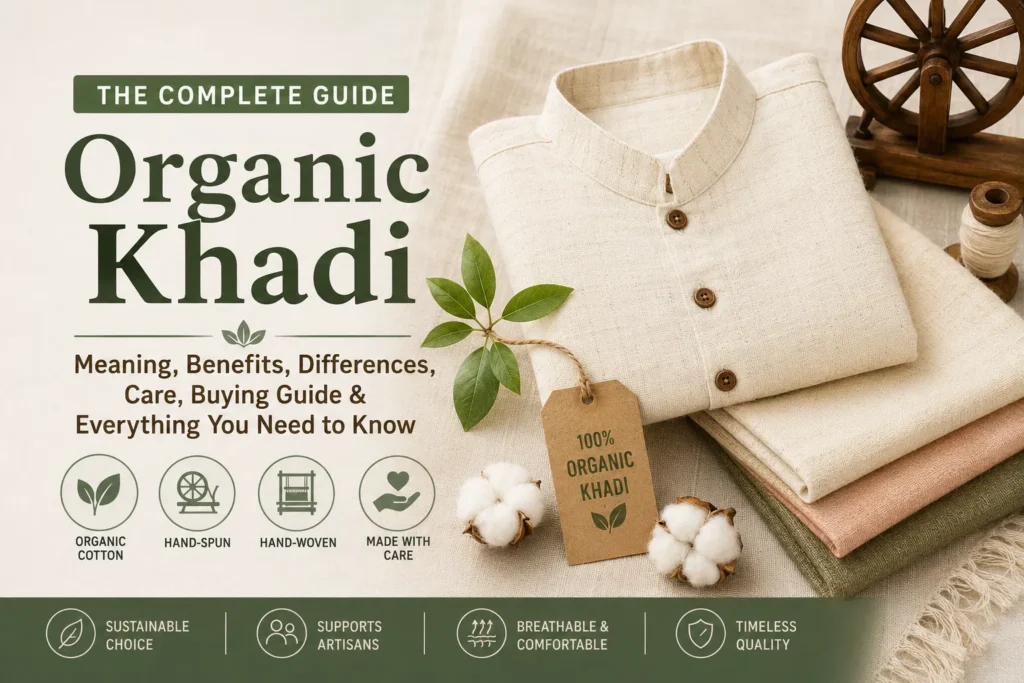
Choosing sustainable clothing has become more important than ever, and Organic Khadi is gaining attention as a fabric that combines traditional craftsmanship with environmentally responsible practices. However, many people still wonder whether Organic Khadi is different from regular Khadi, how it is made, and whether it is worth the investment.
Organic Khadi brings together two important concepts. Organic refers to cotton grown without synthetic pesticides or chemical fertilisers, while Khadi refers to fabric that is hand-spun and handwoven using traditional techniques. When these two processes come together, the result is a natural fabric that supports skilled artisans, reduces environmental impact, and offers exceptional comfort for everyday wear.
Unlike many articles that only discuss sustainability, this guide covers everything you need to know before buying Organic Khadi. You’ll learn how it is made, how it compares with regular Khadi and Organic Cotton, how to identify genuine Organic Khadi, why it costs more, how to care for it, and which Organic Khadi garments are best suited for Kerala’s warm and humid climate.
Whether you’re looking for an Organic Khadi shirt for daily wear, a handcrafted saree for special occasions, or simply want to understand what makes this fabric unique, this guide will help you make an informed decision with confidence.
What Is Organic Khadi?
Organic Khadi is a natural fabric made by combining organically grown cotton with the traditional process of hand spinning and hand weaving. In simple terms, the cotton is cultivated without synthetic pesticides or chemical fertilisers, and the yarn is spun by hand before being woven into fabric on a handloom. This combination creates a textile that supports sustainable farming while preserving India’s rich weaving heritage.
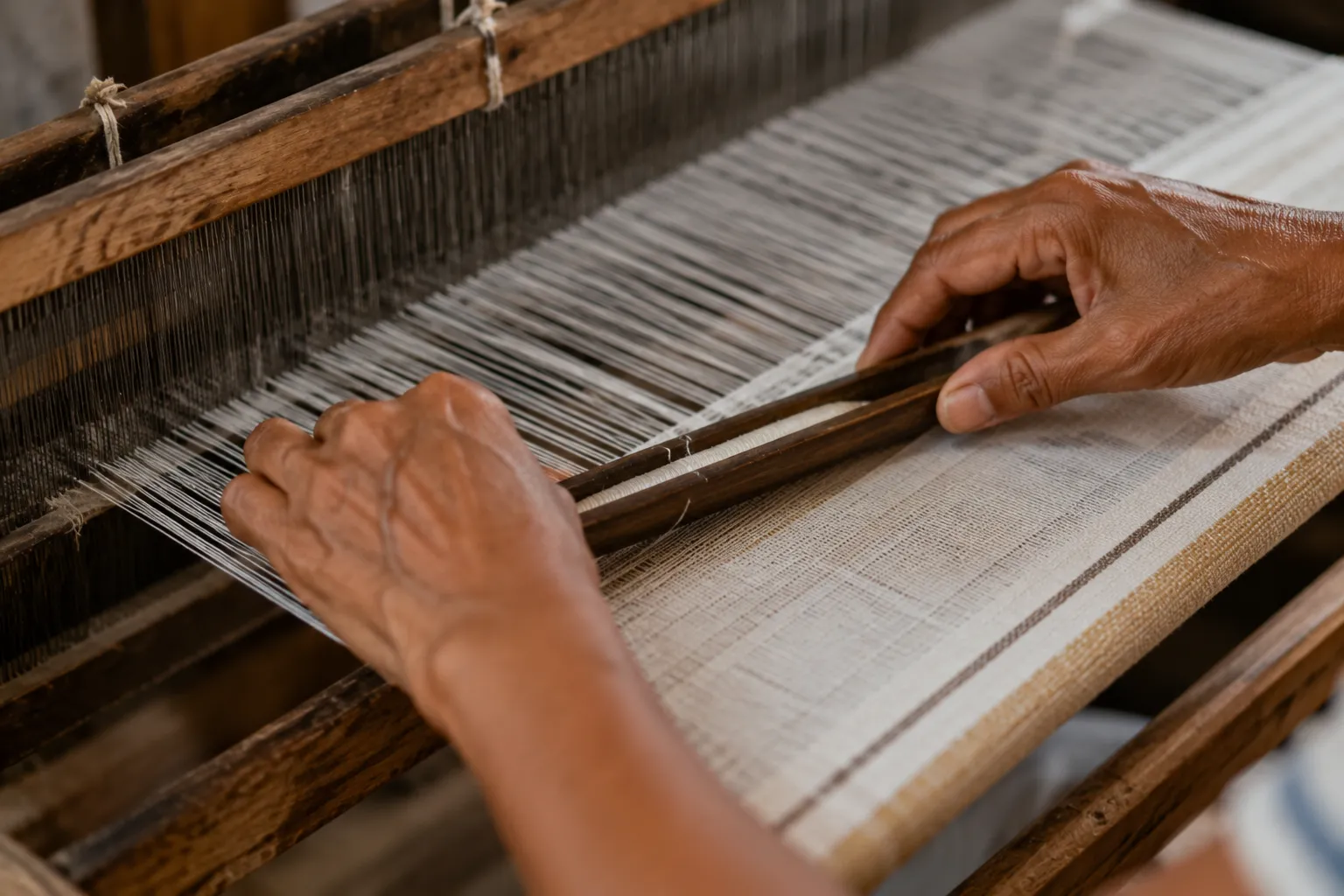
Many people assume that all Khadi is organic, but that isn’t true. Likewise, not all Organic Cotton fabrics are Khadi. These two terms describe different parts of the production process. Organic refers to how the cotton is grown, while Khadi refers to how the fabric is made. Understanding this difference helps you identify genuine Organic Khadi and make informed buying decisions.
Organic Khadi is valued for its breathable texture, comfortable feel, and timeless appearance. Because it is hand-spun and handwoven, each piece has subtle variations in the yarn and weave that make it unique. These natural characteristics are signs of authentic craftsmanship rather than manufacturing defects.
Today, Organic Khadi is used to create a wide range of clothing, including shirts, kurtas, sarees, dresses, dhotis, scarves, and home textiles. It appeals to people who want clothing made with greater care for the environment while also supporting skilled artisans and traditional weaving communities.
Understanding Organic Cotton
Organic Cotton is cotton grown using farming practices that minimise the use of synthetic chemicals. Instead of relying on artificial pesticides and fertilisers, organic farming focuses on improving soil health, conserving biodiversity, and using natural methods to manage pests and maintain crop fertility.
The goal of Organic Cotton farming is not only to produce cleaner fibre but also to reduce the environmental impact of cotton cultivation. Depending on the farming practices and certification standards followed, organic cotton production can contribute to healthier soil and more sustainable agricultural systems.
However, Organic Cotton alone does not determine how a fabric is manufactured. The cotton can still be processed using modern industrial methods to produce machine-spun and machine-woven textiles. This is why Organic Cotton and Organic Khadi are not the same.
What Makes a Fabric Khadi?
Khadi is defined by its production process rather than the type of cotton used. A fabric is considered Khadi when the yarn is hand-spun and the cloth is handwoven using traditional methods. This process has been practised in India for generations and remains an important source of livelihood for artisan communities.
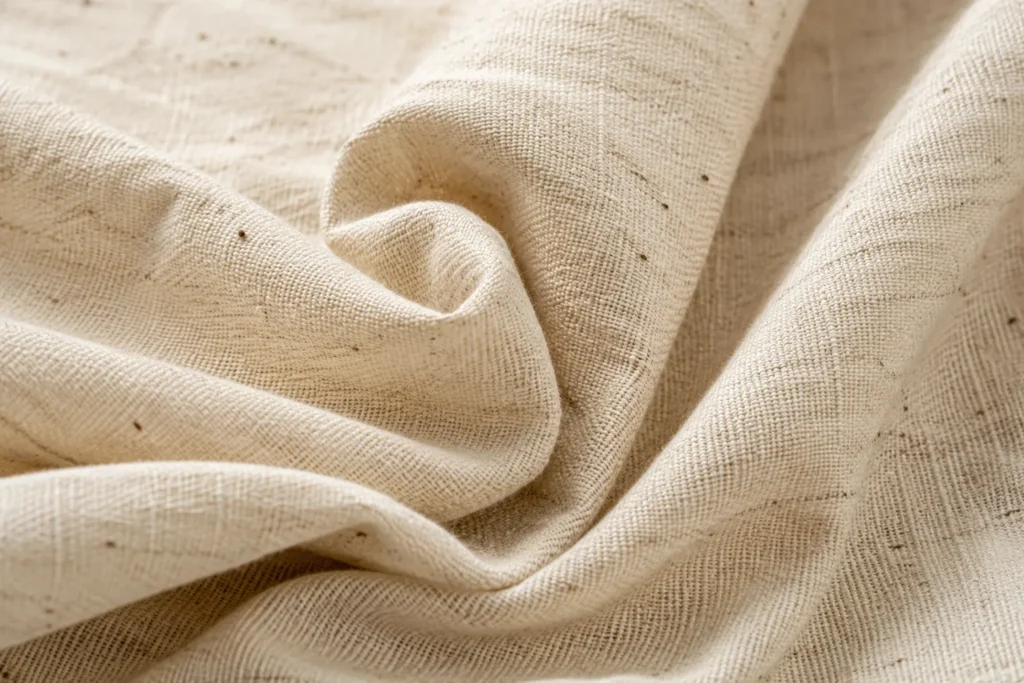
Unlike machine-made fabrics, hand-spun yarn often has slight natural variations in thickness. These variations allow better air circulation within the fabric, giving Khadi its distinctive texture and breathable feel. Rather than seeing these irregularities as flaws, they should be recognised as evidence of authentic handmade craftsmanship.
The production of Khadi is also labour-intensive. From spinning yarn on a charkha to weaving it on a handloom, every stage requires skill, patience, and attention to detail. This handcrafted approach is one of the reasons why Khadi continues to be appreciated for its quality, durability, and cultural significance.
Organic Khadi at a Glance
| Feature | Organic Khadi |
|---|---|
| Cotton source | Organically grown cotton |
| Farming method | No synthetic pesticides or chemical fertilisers |
| Yarn production | Hand-spun |
| Fabric production | Handwoven |
| Texture | Naturally soft with unique handwoven variations |
| Breathability | Excellent airflow for warm and humid climates |
| Sustainability | Combines organic farming with traditional craftsmanship |
| Best suited for | Everyday wear, office wear, festive clothing, travel, and Kerala’s tropical climate |
Can Khadi Be Organic?
Yes, Khadi can be organic, but not all Khadi is Organic Khadi. This is one of the biggest misconceptions among shoppers and even many fashion brands.
The confusion happens because the words “organic” and “Khadi” describe two different stages of making a fabric. Organic refers to the way the cotton is grown, while Khadi refers to the way the fabric is produced. A fabric can only be called Organic Khadi when it combines both organic cotton farming and the traditional hand-spinning and hand-weaving process.
Understanding this difference will help you choose authentic Organic Khadi instead of relying on marketing claims or product labels alone.
Organic and Khadi Mean Different Things
Although these terms are often used together, they are not interchangeable.
- Organic describes the cultivation of cotton. The cotton is grown without synthetic pesticides or chemical fertilisers and follows recognised organic farming practices.
- Khadi describes the production method. The yarn is hand-spun, and the fabric is handwoven using traditional techniques.
Because these are separate processes, a fabric may satisfy one condition without meeting the other.
Is Every Khadi Fabric Organic?
No.
Traditional Khadi can be made from cotton grown through conventional farming methods. While the yarn is still hand-spun and the fabric is handwoven, the cotton itself may not come from certified organic farms.
This means a Khadi fabric can be authentic without being organic.
That is why buyers should not assume every Khadi garment is automatically Organic Khadi.
Is Every Organic Cotton Fabric Khadi?
No.
Organic Cotton only tells you how the cotton was grown.
After harvesting, the cotton may be processed entirely in modern textile mills using machine spinning and machine weaving. These fabrics are Organic Cotton fabrics, but they are not Khadi because they are not hand-spun or handwoven.
This distinction is important when comparing sustainable clothing options.
When Can a Fabric Be Called Organic Khadi?
A fabric can be described as Organic Khadi when it meets both conditions:
✔ The cotton is grown using recognised organic farming practices.
✔ The yarn is hand-spun and the fabric is handwoven using traditional Khadi methods.
If either of these conditions is missing, the fabric should not be described as Organic Khadi.
Understanding the Difference
| Fabric Type | Organic Cotton | Hand-Spun | Handwoven | Can Be Called Organic Khadi? |
|---|---|---|---|---|
| Regular Khadi | ✗ | ✓ | ✓ | ✗ |
| Organic Cotton Fabric | ✓ | ✗ | ✗ | ✗ |
| Organic Khadi | ✓ | ✓ | ✓ | ✓ |
This simple comparison shows why the terms should not be used interchangeably.
Why This Difference Matters When Buying
Knowing the difference helps you make a better purchasing decision.
If your priority is supporting traditional artisans, look for genuine hand-spun and handwoven Khadi.
If your priority is environmentally responsible farming, choose clothing made from Organic Cotton.
If you want both traditional craftsmanship and organically grown cotton, Organic Khadi offers the best combination.
Rather than relying on attractive marketing phrases, always read the product description carefully and buy from brands that clearly explain the origin of their cotton and their weaving process.
A Real-World Example
Imagine two white shirts displayed side by side.
The first shirt is made from Organic Cotton that has been machine-spun and machine-woven in a textile mill. It is an Organic Cotton shirt, but it is not Khadi.
The second shirt is made from organically grown cotton, hand-spun into yarn, and handwoven by skilled artisans. This shirt is Organic Khadi because it combines sustainable farming with traditional craftsmanship.
At first glance, both shirts may look similar. However, their production methods, texture, craftsmanship, and the communities they support are very different.2
How Organic Khadi Is Made: From Farm to Fabric
Every piece of Organic Khadi tells a story that begins long before it reaches your wardrobe. Unlike mass-produced fabrics, Organic Khadi is created through a series of carefully managed steps that combine responsible farming with traditional craftsmanship. Each stage plays an important role in the quality, comfort, and character of the final fabric.
From growing organic cotton to weaving the finished cloth by hand, the process values patience over speed and craftsmanship over mass production. Understanding this journey helps you appreciate why Organic Khadi is considered one of the most unique and sustainable textiles.
Step 1: Growing Organic Cotton
The journey begins on farms where cotton is cultivated using recognised organic farming practices. Farmers focus on maintaining healthy soil and reducing dependence on synthetic pesticides and chemical fertilisers. Instead, they rely on natural methods that support long-term soil fertility and encourage biodiversity.
Healthy cotton plants produce natural fibres that become the foundation of Organic Khadi. Since the quality of the fibre influences the quality of the fabric, careful farming is the first step towards creating comfortable and durable clothing.
Step 2: Harvesting the Cotton
Once the cotton bolls mature, they are harvested and prepared for processing. The harvested cotton contains seeds and natural plant material that must be removed before spinning can begin.
Proper harvesting and handling help preserve the strength and softness of the cotton fibres, ensuring they are suitable for creating high-quality yarn.
Step 3: Ginning – Separating Fibre from Seeds
The harvested cotton is taken through a process called ginning. During this stage, the cotton fibres are separated from the seeds and cleaned of remaining plant matter.
After ginning, the cotton becomes soft, fluffy fibre that is ready for the next stage of production. Although this step receives little attention, it plays an essential role in producing clean and consistent yarn.
Step 4: Carding the Cotton
The cleaned cotton fibres are gently aligned through a process known as carding. Carding arranges the fibres in a similar direction while removing small impurities that may remain after ginning.
This creates a soft, continuous layer of fibres that can be drawn into yarn more smoothly during hand spinning.
Step 5: Hand Spinning the Yarn
This is where Organic Khadi begins to differ significantly from machine-made fabrics.
Instead of using industrial spinning machines, skilled artisans spin the cotton into yarn by hand, traditionally using a charkha or similar hand-operated spinning wheel. This process requires patience, precision, and years of experience.
Because the yarn is created by hand, it develops slight natural variations in thickness. These variations are not defects—they are one of the defining characteristics of authentic Khadi. They also contribute to the fabric’s breathable structure and unique appearance.
Step 6: Hand Weaving on a Loom
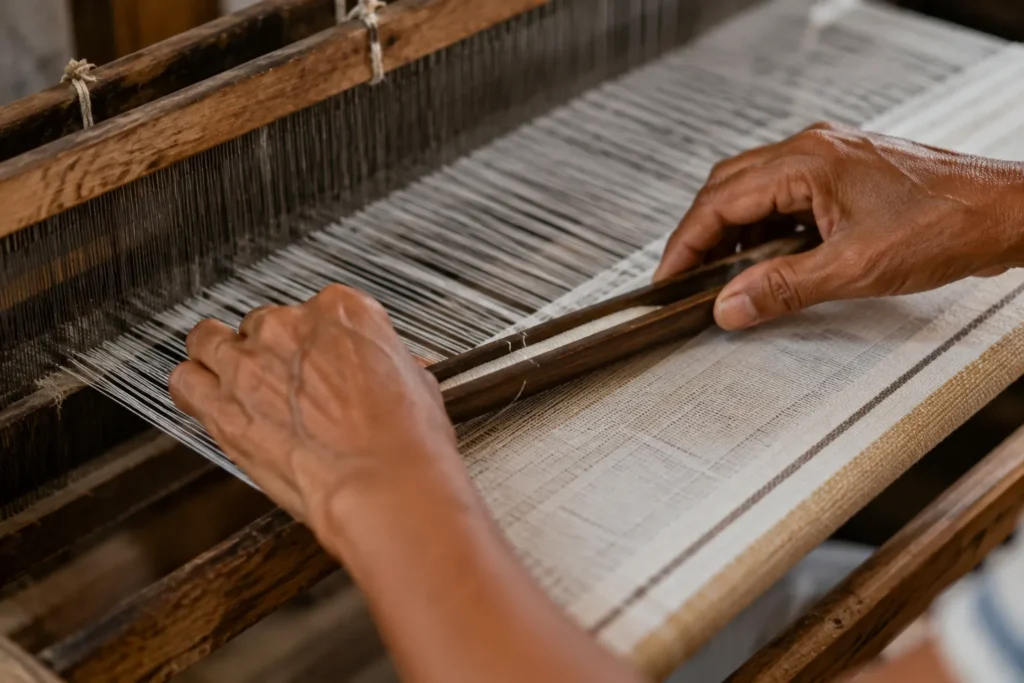
After spinning, the yarn is woven into fabric using a handloom.
Every thread is carefully interlaced by skilled weavers, creating cloth that cannot be perfectly replicated by automated machines. The pace of hand weaving allows artisans to maintain close control over the fabric, resulting in subtle textures and a distinctive handcrafted finish.
The slight irregularities in the weave are a hallmark of genuine Khadi and reflect the human skill behind every metre of fabric.
Step 7: Finishing the Fabric
Once weaving is complete, the fabric is inspected and finished to prepare it for garment production.
Depending on the intended use, the fabric may be washed, softened, or dyed using appropriate processes. Some Organic Khadi products also use natural or low-impact dyes, although this depends on the manufacturer and product specifications.
The goal is to preserve the natural character of the fabric while improving its appearance, feel, and usability.
Step 8: Crafting the Final Garment
The finished Organic Khadi fabric is then cut and stitched into garments such as shirts, kurtas, sarees, dresses, dhotis, scarves, and other apparel.
Each garment carries the combined efforts of farmers, spinners, weavers, designers, and tailors. Unlike fast-fashion production, every stage involves skilled craftsmanship and careful attention to detail.
This is one of the reasons Organic Khadi is valued not only as a fabric but also as a reflection of India’s textile heritage.
Farm-to-Fabric Journey at a Glance
| Stage | What Happens | Why It Matters |
|---|---|---|
| Organic Cotton Farming | Cotton is grown using recognised organic farming practices. | Produces natural fibres while supporting more sustainable agriculture. |
| Harvesting | Mature cotton is collected from the fields. | Preserves fibre quality for spinning. |
| Ginning | Cotton fibres are separated from seeds. | Produces clean, usable cotton fibre. |
| Carding | Fibres are aligned and cleaned. | Prepares fibres for smooth hand spinning. |
| Hand Spinning | Artisans spin cotton into yarn using a charkha. | Creates authentic Khadi yarn with natural variations. |
| Hand Weaving | Yarn is woven on a handloom. | Produces breathable fabric with a handcrafted texture. |
| Finishing | Fabric is washed, inspected, and prepared. | Improves comfort and prepares the cloth for tailoring. |
| Garment Making | Fabric is stitched into finished clothing. | Creates durable garments ready for everyday wear. |
Why This Traditional Process Makes Organic Khadi Unique
Unlike factory-made textiles that prioritise speed and uniformity, Organic Khadi values craftsmanship, quality, and tradition. The combination of organically grown cotton, hand-spun yarn, and handwoven fabric gives Organic Khadi its distinctive texture, excellent breathability, and timeless appeal.
Each piece reflects hours of skilled work carried out by experienced artisans. The slight variations in the weave, the soft natural feel, and the story behind its production make every Organic Khadi garment unique. Rather than being imperfections, these characteristics are reminders that the fabric has been created by human hands instead of automated machines.
Organic Khadi vs Regular Khadi: What’s the Difference?
At first glance, Organic Khadi and regular Khadi may look almost identical. Both are hand-spun and handwoven fabrics known for their breathability, comfort, and traditional craftsmanship. However, the biggest difference lies in the cotton used to make the fabric.
Organic Khadi is made from organically grown cotton, while regular Khadi may be produced using cotton grown through conventional farming methods. Although both fabrics preserve the traditional art of hand spinning and hand weaving, the source of the cotton influences their environmental impact, production process, and the information buyers should look for before making a purchase.
If you’re choosing between the two, understanding these differences will help you select the fabric that best matches your values, budget, and clothing needs.
Quick Comparison: Organic Khadi vs Regular Khadi
| Feature | Organic Khadi | Regular Khadi |
|---|---|---|
| Cotton source | Organically grown cotton | Conventionally grown or organic cotton |
| Farming method | Organic farming practices | Depends on the cotton source |
| Hand-spun | ✓ | ✓ |
| Handwoven | ✓ | ✓ |
| Traditional craftsmanship | ✓ | ✓ |
| Breathability | Excellent | Excellent |
| Comfort | Excellent | Excellent |
| Natural texture | ✓ | ✓ |
| Environmental impact | Depends on farming practices and production methods | Depends on farming practices and production methods |
| Certification | May carry recognised organic certifications where applicable | Usually not associated with organic certification |
| Best for | Buyers seeking both traditional craftsmanship and organically grown cotton | Buyers focused primarily on authentic Khadi craftsmanship |
1. Cotton Source
The most significant difference is where the cotton comes from.
Organic Khadi starts with cotton grown according to recognised organic farming practices. These methods avoid synthetic pesticides and chemical fertilisers while focusing on maintaining healthy soil and sustainable agricultural systems.
Regular Khadi, on the other hand, may use cotton grown through conventional farming or, in some cases, organically grown cotton. Since “Khadi” describes the production method rather than the farming method, the cotton source can vary.
This is why checking product information is important instead of assuming every Khadi fabric is organic.
2. Manufacturing Process
When it comes to craftsmanship, both fabrics follow the same traditional production method.
In both Organic Khadi and regular Khadi:
- The yarn is hand-spun.
- The fabric is handwoven.
- Skilled artisans complete the weaving process using traditional techniques.
This means both fabrics preserve India’s rich handloom heritage and support artisan communities.
The key difference is not how the fabric is woven, but how the cotton was cultivated before weaving began.
3. Comfort and Breathability
One of the reasons Khadi has remained popular for generations is its exceptional comfort.
Because both Organic Khadi and regular Khadi are hand-spun and handwoven, they offer:
- Excellent airflow
- Comfortable everyday wear
- A soft feel that improves with use
- Suitable performance in warm and humid climates
In regions like Kerala, where temperatures remain high for much of the year, both fabrics can provide a comfortable wearing experience.
The comfort comes primarily from the traditional Khadi weaving process rather than whether the cotton is organic.
4. Environmental Considerations
Organic Khadi is often chosen by people who want clothing made from organically grown cotton combined with traditional handloom production.
The farming practices used for organic cotton aim to reduce reliance on synthetic agricultural chemicals and support healthier farming systems. However, the overall environmental impact of any garment also depends on factors such as dyeing, finishing, transportation, and manufacturing practices.
Regular Khadi also has sustainability advantages because it is hand-spun and handwoven, reducing dependence on energy-intensive industrial textile production during these stages.
Rather than assuming one fabric is always better in every situation, it’s helpful to consider the complete production process.
5. Price Difference
Organic Khadi often costs more than regular Khadi.
Several factors can influence the price:
- Organic cotton cultivation
- Smaller production volumes
- Certification costs (where applicable)
- Hand spinning
- Hand weaving
- Skilled craftsmanship
Price varies between brands depending on sourcing, quality, finishing, and garment design. A higher price alone does not guarantee authenticity, so buyers should always review product details carefully.
6. Which One Should You Choose?
The right choice depends on your priorities.
Choose Organic Khadi if you:
- Prefer clothing made from organically grown cotton.
- Value recognised organic farming practices.
- Want traditional craftsmanship combined with organic fibre.
- Are looking for a sustainable clothing option backed by transparent sourcing.
Choose Regular Khadi if you:
- Want authentic hand-spun and handwoven fabric.
- Appreciate traditional Indian craftsmanship.
- Prioritise comfort and breathability.
- Prefer a wider range of price options.
Both fabrics celebrate India’s textile heritage and support artisan skills. The main difference is whether organically grown cotton is part of the production journey.
Organic Khadi vs Regular Khadi: Which Is Better?
There is no universal answer because both fabrics have their own strengths.
If your goal is to support traditional weaving and artisan craftsmanship, regular Khadi is an excellent choice.
If you also want the cotton itself to come from recognised organic farming practices, Organic Khadi offers that additional benefit.
Instead of asking which fabric is “better,” ask which one best matches your values, preferences, and intended use. That approach will help you make a more informed purchase.
Key Takeaway
Organic Khadi and regular Khadi share the same handcrafted weaving tradition, but they differ in the origin of the cotton used. Organic Khadi combines hand-spun and handwoven craftsmanship with organically grown cotton, while regular Khadi may use conventionally grown or organic cotton. Understanding this distinction allows you to choose a fabric that aligns with your priorities while appreciating the craftsmanship behind both.
Organic Khadi vs Organic Cotton: Which Fabric Should You Choose?
Many people believe that Organic Khadi and Organic Cotton are the same fabric. Although they share one important ingredient—organically grown cotton—they are made in very different ways. The difference lies in how the cotton is transformed into fabric.
Organic Cotton refers to the raw material, while Organic Khadi refers to both the raw material and the traditional production process. Understanding this distinction makes it easier to choose clothing that matches your lifestyle, values, and comfort preferences.
If you’re shopping for sustainable clothing, this comparison will help you understand what sets these fabrics apart and when each one is the right choice.
Quick Comparison: Organic Khadi vs Organic Cotton
| Feature | Organic Khadi | Organic Cotton Fabric |
|---|---|---|
| Cotton source | Organically grown cotton | Organically grown cotton |
| Yarn production | Hand-spun | Usually machine-spun |
| Fabric production | Handwoven | Usually machine-woven |
| Production speed | Slow, artisan-led | Large-scale industrial production |
| Texture | Natural, handcrafted with subtle variations | Smooth and more uniform |
| Appearance | Unique handmade character | Consistent factory finish |
| Breathability | Excellent | Excellent |
| Supports artisans | Yes | Depends on the manufacturer |
| Best suited for | Traditional, premium, sustainable clothing | Everyday basics and large-scale apparel |
The Biggest Difference Is How the Fabric Is Made
Both fabrics begin with organically grown cotton, but their production methods are completely different.
Organic Cotton fabric is usually produced in textile mills. Machines spin the cotton into yarn and weave it into fabric, allowing manufacturers to produce large quantities quickly and with consistent finishes.
Organic Khadi, however, follows a traditional approach. Skilled artisans spin the cotton into yarn by hand before weaving it on a handloom. This slower process gives the fabric its distinctive texture and handcrafted character.
In simple terms:
- Organic Cotton focuses on how the cotton is grown.
- Organic Khadi focuses on how the cotton is grown and how the fabric is made.
Texture and Feel
One of the easiest ways to notice the difference is by touching the fabric.
Organic Cotton fabric usually has a smooth, even surface because machines create consistent yarn thickness and weave patterns.
Organic Khadi feels different. Since the yarn is hand-spun, slight natural variations appear throughout the fabric. These subtle irregularities are a sign of genuine handcrafted production and give each piece its own character.
Neither texture is better or worse—they simply offer different experiences.
Comfort and Breathability
Both Organic Cotton and Organic Khadi are comfortable fabrics suitable for warm weather.
Organic Cotton is soft, lightweight, and widely used for T-shirts, casual shirts, children’s clothing, and everyday essentials.
Organic Khadi combines softness with the breathable qualities created by hand-spun yarn and handwoven construction. Many people appreciate its airy feel, particularly in warm and humid climates like Kerala.
Both fabrics perform well in summer, but they provide different wearing experiences because of their construction.
Durability
With proper care, both fabrics can offer long service lives.
Organic Cotton fabrics are designed for everyday use and often maintain a consistent appearance because of their machine-made structure.
Organic Khadi also develops beautifully over time. Many wearers find that the fabric becomes softer with regular use while retaining its handcrafted character.
Following the recommended washing and care instructions is important for both fabrics.
Sustainability
Both fabrics contribute to more responsible fashion choices, but in different ways.
Organic Cotton focuses on farming practices by using organically grown cotton.
Organic Khadi combines those farming practices with traditional hand spinning and hand weaving, preserving artisan skills that have been passed down through generations.
The overall sustainability of any garment also depends on additional factors such as dyeing, finishing, transportation, packaging, and manufacturing practices.
Which Fabric Is Better for Kerala’s Climate?
Kerala’s tropical weather demands clothing that is breathable, lightweight, and comfortable throughout the day.
Organic Cotton is a practical choice for everyday casual wear because it is soft and easy to maintain.
Organic Khadi is also well suited to Kerala’s climate. Its handwoven construction allows excellent airflow, making it comfortable for office wear, festive occasions, travel, and daily use.
The choice depends more on the look, feel, and craftsmanship you prefer than on climate alone.
Which One Should You Choose?
Choose Organic Cotton if you:
- Prefer smooth, uniform fabrics.
- Want easy-to-maintain everyday clothing.
- Like modern casual wear.
- Need affordable basics for regular use.
Choose Organic Khadi if you:
- Appreciate handmade craftsmanship.
- Want clothing with a unique texture and character.
- Value traditional Indian weaving techniques.
- Prefer garments that combine organic cotton with artisan-made production.
Neither fabric is universally better. The right choice depends on what matters most to you.
Organic Khadi vs Organic Cotton: At a Glance
| If you want… | Choose… |
|---|---|
| Handmade craftsmanship | Organic Khadi |
| Uniform machine-made finish | Organic Cotton |
| Traditional weaving heritage | Organic Khadi |
| Everyday casual basics | Organic Cotton |
| Artisan-made clothing | Organic Khadi |
| Organically grown cotton | Both |
Benefits of Organic Khadi
Organic Khadi is valued for much more than its traditional appearance. It combines organically grown cotton with hand-spun and handwoven craftsmanship, creating a fabric that offers comfort, durability, and timeless style. While every person’s experience may vary depending on the weave, garment construction, and fabric weight, Organic Khadi has several qualities that make it a preferred choice for many people.
Let’s explore the key benefits and understand what makes Organic Khadi stand out.
1. Excellent Breathability for Warm and Humid Weather
One of the biggest reasons people choose Organic Khadi is its breathability.
During the hand-spinning and hand-weaving process, the fabric develops a structure that allows air to circulate more freely than many tightly woven industrial fabrics. This natural airflow helps the fabric feel comfortable in warm and humid conditions.
For people living in tropical regions like Kerala, breathable clothing can make everyday activities, office wear, travel, and festive occasions more comfortable.
Whether you’re spending time outdoors or indoors, Organic Khadi provides a light and airy wearing experience throughout the day.
2. Comfortable for Everyday Wear
Comfort is one of the strongest qualities of Organic Khadi.
The natural cotton fibres feel soft against the skin, and many Organic Khadi garments become even softer with regular use and proper care. Unlike synthetic fabrics that may trap heat, Organic Khadi allows the body to remain more comfortable in changing weather conditions.
Because of this, many people choose Organic Khadi for:
- Daily wear
- Office clothing
- Casual outings
- Travel
- Traditional occasions
Its versatility makes it suitable for both modern and traditional wardrobes.
3. Unique Handcrafted Character
Every piece of Organic Khadi is slightly different.
Since the yarn is hand-spun and the fabric is handwoven, small natural variations may appear in the weave or texture. These subtle differences are signs of genuine craftsmanship rather than manufacturing defects.
Unlike mass-produced fabrics where every metre looks identical, Organic Khadi carries the individuality of handmade production. This gives every garment its own distinctive character.
For buyers who appreciate artisan-made products, this uniqueness adds lasting value.
4. Supports Traditional Artisan Communities
Choosing Organic Khadi also supports generations of skilled craftspeople.
From cotton farmers and hand spinners to weavers and garment makers, many people contribute to the journey of creating Organic Khadi. Purchasing handcrafted textiles helps sustain traditional weaving skills that have been passed down through families for decades.
For many buyers, this cultural connection is just as important as the fabric itself.
5. A More Thoughtful Fashion Choice
Many people choose Organic Khadi because they want clothing made with greater attention to both craftsmanship and responsible sourcing.
Organic cotton farming focuses on recognised organic agricultural practices, while hand spinning and hand weaving reduce dependence on large-scale industrial production during these stages. Together, these processes represent a slower and more mindful approach to textile production.
Rather than following short-lived fashion trends, Organic Khadi encourages investing in garments designed to be worn and appreciated over time.
6. Timeless Style That Never Goes Out of Fashion
Fashion trends change every season, but Khadi has remained relevant for generations.
Its clean texture and natural appearance allow it to work equally well in traditional and contemporary clothing. Designers continue to reinterpret Organic Khadi into shirts, dresses, kurtas, sarees, jackets, and modern silhouettes without losing its handcrafted identity.
This versatility makes Organic Khadi suitable for:
- Office wear
- Business casual clothing
- College wear
- Festive celebrations
- Weddings
- Travel
- Everyday fashion
A well-designed Organic Khadi garment rarely feels outdated.
7. Suitable Across Different Seasons
Although Organic Khadi is especially popular during summer, it is not limited to one season.
Lightweight weaves provide excellent comfort in hot weather, while medium and heavier weaves can also be worn during cooler months. Layering Organic Khadi with jackets or shawls allows the fabric to adapt to different climates and occasions.
Choosing the right weave and garment style is often more important than choosing the fabric itself.
8. Durable When Properly Maintained
Organic Khadi is made to be worn and enjoyed for years.
Like any natural fabric, its lifespan depends on fabric quality, construction, and proper care. Following recommended washing, drying, and storage practices helps preserve the garment’s appearance and comfort.
Many wearers appreciate that well-maintained Organic Khadi continues to develop a softer feel while retaining its handcrafted character.
9. A Versatile Fabric for Every Wardrobe
Organic Khadi is no longer limited to traditional clothing.
Today, it is used to create:
- Shirts
- Kurtas
- Sarees
- Dhotis
- Dresses
- Tunics
- Jackets
- Co-ord sets
- Scarves
- Home textiles
Its ability to blend heritage with contemporary fashion makes it suitable for people of different ages and lifestyles.
10. Combines Heritage with Modern Sustainability
Perhaps the greatest strength of Organic Khadi is that it brings together two important values.
It preserves India’s centuries-old tradition of hand spinning and hand weaving while incorporating organically grown cotton that aligns with modern interest in responsible textile production.
For buyers looking beyond fast fashion, Organic Khadi offers an opportunity to choose clothing that reflects craftsmanship, culture, and conscious decision-making in one fabric.
Benefits of Organic Khadi at a Glance
| Benefit | Why It Matters |
|---|---|
| Excellent breathability | Comfortable in warm and humid climates. |
| Everyday comfort | Soft natural fibres suitable for regular wear. |
| Handmade character | Every garment has its own unique texture. |
| Supports artisans | Helps preserve traditional weaving skills. |
| Thoughtful production | Combines organic farming with handcrafted manufacturing. |
| Timeless appearance | Suitable for both modern and traditional fashion. |
| Seasonal versatility | Available in different weaves for different climates. |
| Long-lasting with proper care | Designed for years of use when maintained well. |
| Wide range of clothing | Used for shirts, sarees, kurtas, dresses, and more. |
| Heritage and sustainability | Combines traditional craftsmanship with responsible sourcing. |
Is Organic Khadi Worth Choosing?
If you’re looking for a fabric that combines comfort, craftsmanship, and a connection to India’s textile heritage, Organic Khadi is a compelling choice. Its breathable construction, handcrafted character, and versatility make it suitable for everyday wear as well as special occasions.
Rather than being defined by a single feature, Organic Khadi stands out because it brings together organically grown cotton, skilled artisan work, and timeless design. For many people, that combination offers value that goes beyond the fabric itself.
Why Does Organic Khadi Cost More?
If you’ve compared Organic Khadi with machine-made cotton clothing, you’ve probably noticed that Organic Khadi often comes with a higher price tag. This leads many buyers to ask a simple question:
Is Organic Khadi really worth the extra cost?
The answer depends on what you’re paying for. Unlike mass-produced fabrics, Organic Khadi is created through a slower, labour-intensive process that combines organically grown cotton with traditional hand spinning and hand weaving. The price reflects the time, skill, and craftsmanship involved in making each garment rather than just the fabric itself.
Understanding these factors helps you see the value behind the price instead of judging it by cost alone.
1. Organic Cotton Farming Requires Greater Care
The journey begins long before the fabric is woven.
Organic cotton is grown using recognised organic farming practices instead of relying on synthetic pesticides and chemical fertilisers. Farmers must carefully manage soil health, crop rotation, and natural pest control throughout the growing season.
These farming methods often require more planning and hands-on management than conventional cotton farming, which can influence the cost of producing organic cotton.
2. Hand Spinning Takes Time
Unlike factory-made yarn that can be produced quickly using industrial machinery, Organic Khadi yarn is traditionally spun by skilled artisans.
Each thread is created with care, and maintaining consistent yarn quality requires experience and patience. This slower process cannot match the production speed of large textile mills, but it gives Organic Khadi its distinctive handcrafted character.
Time is one of the biggest reasons why authentic Khadi cannot be produced as cheaply as machine-made fabric.
3. Every Metre Is Handwoven
Once the yarn is ready, it is woven by hand on a traditional loom.
Hand weaving is a skilled craft that requires concentration, precision, and years of practice. Unlike automated weaving machines that produce thousands of metres of fabric each day, a handloom produces fabric at a much slower pace.
This careful craftsmanship contributes to both the uniqueness and the value of Organic Khadi.
4. Skilled Craftsmanship Adds Value
Creating Organic Khadi is not a one-person process.
Many skilled people contribute to the final garment, including:
- Organic cotton farmers
- Fibre processors
- Hand spinners
- Handloom weavers
- Tailors
- Quality inspectors
- Designers
Each stage requires specialised knowledge and careful workmanship.
When you buy Organic Khadi, you’re investing in the combined efforts of everyone involved in bringing the fabric from farm to finished garment.
5. Smaller Production Volumes
Large textile mills manufacture fabrics on a massive scale, helping reduce production costs through automation and high output.
Organic Khadi is different.
Because it is produced using traditional methods, manufacturing volumes are generally much smaller. Producing fewer garments often means higher production costs per piece.
While this may increase the price, it also helps preserve quality and handcrafted authenticity.
6. Certification and Transparency
Some Organic Khadi products may use cotton that follows recognised organic standards or carries relevant certifications.
Obtaining and maintaining these certifications requires documentation, inspections, and ongoing compliance throughout the supply chain. These processes can add to production costs.
However, buyers should remember that certification alone does not guarantee overall product quality. It’s equally important to look for transparent information about the cotton source, weaving process, and the brand behind the garment.
7. Quality Designed for Long-Term Use
Many fast-fashion garments are designed around short trends and frequent replacement.
Organic Khadi is often chosen with a different mindset.
When properly cared for, a well-made Organic Khadi garment can remain part of your wardrobe for years. Many wearers also appreciate how the fabric gradually becomes softer with regular use while retaining its handcrafted character.
Looking at cost over the lifetime of the garment often provides a better measure of value than comparing the purchase price alone.
Organic Khadi vs Fast Fashion
| Factor | Organic Khadi | Typical Fast Fashion Clothing |
|---|---|---|
| Cotton source | Organically grown cotton (where specified) | Varies by manufacturer |
| Production | Hand-spun and handwoven | Machine-produced |
| Manufacturing speed | Slow, artisan-led | High-speed industrial production |
| Craftsmanship | Handmade | Automated manufacturing |
| Individual character | Every garment is slightly unique | Highly uniform appearance |
| Longevity | Designed for long-term use with proper care | Depends on fabric quality and construction |
| Buying approach | Quality and craftsmanship | Speed, trends, and volume |
Is Organic Khadi Worth the Price?
For many people, the answer is yes—provided the product is genuine and well made.
Organic Khadi offers value beyond the fabric itself. You’re choosing clothing created through traditional craftsmanship, made from organically grown cotton, and designed with quality rather than speed in mind.
If your priority is simply finding the lowest price, machine-made clothing may be a better fit.
However, if you value handcrafted textiles, timeless style, breathable comfort, and responsible production, Organic Khadi offers benefits that many buyers believe justify the additional cost.
The most important step is choosing a trusted brand that clearly explains how its products are sourced and made.
How to Decide Before You Buy
Before purchasing Organic Khadi, ask yourself:
- Is the cotton source clearly explained?
- Does the brand describe how the fabric is made?
- Is the garment hand-spun and handwoven?
- Does the product information mention recognised certifications where applicable?
- Is the stitching and finishing of good quality?
- Will this garment suit my lifestyle and wardrobe for years rather than one season?
These questions help you focus on value instead of price alone.
How to Identify Genuine Organic Khadi Before You Buy
As interest in sustainable clothing continues to grow, more brands are using terms like Organic, Eco-friendly, Natural, and Khadi in their product descriptions. While many products genuinely meet these claims, others may use these words without clearly explaining how the fabric was made or where the cotton came from.
Knowing what to check before purchasing Organic Khadi helps you make a confident decision. Instead of relying on marketing phrases alone, look for clear information about the cotton source, production process, and the brand’s transparency.
The following checklist will help you identify genuine Organic Khadi more confidently.
1. Understand What the Product Is Claiming
Start by reading the product description carefully.
A genuine Organic Khadi product should clearly explain two things:
- The cotton is organically grown.
- The fabric is hand-spun and handwoven.
If a product only mentions Organic Cotton, it does not automatically mean it is Khadi.
Likewise, if it only mentions Khadi, it does not automatically mean the cotton is organic.
Understanding this difference is the first step towards making an informed purchase.
2. Check Whether the Cotton Source Is Explained
Transparent brands usually explain where their cotton comes from and how it is sourced.
Look for product descriptions that mention:
- Organically grown cotton
- Farming practices
- Traceable sourcing
- Supply chain transparency
When brands openly explain these details, it helps buyers better understand the journey of the fabric.
3. Look for Certification Information Where Applicable
Some Organic Khadi products may use cotton that follows recognised organic standards or carries certifications.
If a brand mentions certification, it should clearly explain what the certification relates to. In many cases, certifications apply to the cotton or specific stages of the textile supply chain rather than automatically covering every aspect of the finished garment.
If certification information is provided, it should be easy to understand and not hidden behind vague marketing language.
4. Check Whether the Fabric Is Truly Hand-Spun and Handwoven
Khadi is defined by its production method.
A genuine Khadi product should explain that:
- The yarn is hand-spun.
- The fabric is handwoven.
If these details are missing, don’t assume the fabric is authentic Khadi simply because the product title includes the word “Khadi.”
Responsible brands usually explain their weaving process because it is an important part of the product’s value.
5. Observe the Natural Texture
One of the easiest ways to recognise authentic Khadi is by looking closely at the fabric.
Because the yarn is hand-spun and handwoven, genuine Khadi often displays:
- Slight natural variations in texture
- Subtle differences in yarn thickness
- A handcrafted appearance
These characteristics should not be mistaken for defects. Instead, they are part of what makes every piece of Khadi unique.
Machine-made fabrics, by comparison, usually have a perfectly uniform surface.
6. Buy From Brands That Are Transparent
Trustworthy brands do more than sell clothing.
They explain:
- Where the cotton comes from
- How the fabric is produced
- Who makes the garments
- How the products should be cared for
The more information a brand provides, the easier it becomes for customers to understand what they are buying.
Transparency is often one of the strongest signs of authenticity.
7. Read Product Labels Carefully
Before purchasing, check the product label or online product description.
Useful information may include:
- Fibre composition
- Care instructions
- Country of manufacture
- Weaving method
- Fabric type
- Organic claims
- Certification details (where applicable)
The more complete the product information, the easier it is to make an informed choice.
8. Ask Questions Before Buying
If important details are missing, contact the seller.
You can ask questions such as:
- Is the cotton organically grown?
- Is the yarn hand-spun?
- Is the fabric handwoven?
- Are any recognised certifications available?
- Where is the fabric woven?
- How should I care for this garment?
Brands that value transparency are usually happy to answer these questions.
Common Warning Signs
Be cautious if you notice any of the following:
- The product claims to be “Organic Khadi” but provides no explanation.
- No information is given about the cotton source.
- The weaving process is not mentioned.
- Product descriptions rely only on marketing terms.
- The seller cannot answer basic questions about the fabric.
These signs do not automatically mean a product is inauthentic, but they are good reasons to seek more information before purchasing.
Genuine Organic Khadi Checklist
Before buying, make sure you can answer Yes to most of these questions.
| Checklist | Yes / No |
|---|---|
| Is the cotton described as organically grown? | ☐ |
| Does the product explain that it is hand-spun? | ☐ |
| Does it explain that it is handwoven? | ☐ |
| Are organic claims supported with clear information where applicable? | ☐ |
| Does the brand explain its sourcing process? | ☐ |
| Are care instructions provided? | ☐ |
| Does the fabric show natural handcrafted character? | ☐ |
| Is the seller transparent about the product? | ☐ |
Why Transparency Matters More Than Marketing
Today, many clothing brands use words like natural, eco-friendly, or sustainable because customers are actively looking for environmentally responsible products. However, these terms can have different meanings and are not always enough to describe how a fabric was produced.
Instead of focusing only on attractive labels, take a few minutes to understand the story behind the garment. A brand that openly explains its sourcing, production methods, and craftsmanship gives you far more confidence than one that relies only on promotional language.
Making informed choices not only helps you select better clothing but also encourages greater transparency across the textile industry.
Best Organic Khadi Clothing for Kerala Weather
Kerala’s tropical climate is known for high temperatures, humidity, and frequent rainfall, making breathable clothing essential throughout the year. Organic Khadi is well suited to these conditions because its hand-spun and handwoven structure allows better air circulation than many tightly woven fabrics. This natural breathability helps create a comfortable wearing experience during long working hours, festive celebrations, and everyday travel.
Choosing the right Organic Khadi garment depends on the season, occasion, and fabric weight. Lightweight fabrics are ideal for daily wear, while medium-weight weaves provide a balance between comfort and durability.
Best Organic Khadi Shirts
Ideal for:
- Office wear
- Casual outings
- College
- Business meetings
- Travel
Lightweight Organic Khadi shirts pair well with jeans, chinos, and traditional dhotis, making them one of the most versatile wardrobe choices.
Organic Khadi Kurtas
Suitable for:
- Temple visits
- Festivals
- Onam
- Family functions
- Cultural events
Organic Khadi kurtas combine traditional elegance with all-day comfort.
Organic Khadi Sarees
Organic Khadi sarees are an excellent option for:
- Weddings
- Office wear
- Cultural celebrations
- Daily wear
Their breathable texture makes them comfortable even during Kerala’s humid summers.
Organic Khadi Dhotis
Perfect for:
- Traditional ceremonies
- Weddings
- Religious occasions
- Festivals
A handwoven Organic Khadi dhoti reflects timeless Indian craftsmanship while offering excellent comfort.
Choosing the Right Fabric Weight
| Fabric Weight | Best For |
|---|---|
| Lightweight | Summer, travel, everyday wear |
| Medium Weight | Office, casual wear, festivals |
| Heavy Weight | Jackets, winter layering, structured garments |
Key Takeaway
Organic Khadi adapts easily to Kerala’s climate because it combines breathable comfort with versatile styling. Choosing the right garment and fabric weight ensures year-round comfort.
How to Wash and Care for Organic Khadi
Proper care helps preserve the beauty and longevity of Organic Khadi. Like most natural fabrics, it benefits from gentle handling.
Before the First Wash
Always read the care label provided by the manufacturer.
Some garments may require dry cleaning for the first wash, while others can be gently hand washed.
Washing
- Use mild detergent.
- Wash separately during the first few washes.
- Avoid harsh bleach.
- Do not scrub aggressively.
Machine Washing
If the garment care label permits:
- Use a gentle cycle.
- Wash in cold water.
- Place delicate garments inside a laundry bag.
Drying
- Dry in shade.
- Avoid prolonged direct sunlight.
- Reshape garments while damp.
Ironing
Iron at medium temperature.
Slightly damp fabric usually irons more easily.
Storage
- Store in a cool, dry place.
- Fold neatly.
- Avoid damp storage areas.
Care Checklist
✓ Mild detergent
✓ Gentle washing
✓ Shade drying
✓ Medium ironing
✓ Proper storage
Common Myths About Organic Khadi
Organic Khadi has gained popularity in recent years, but several misconceptions still influence buying decisions. Understanding the facts helps you choose with confidence.
Myth 1: All Khadi Is Organic
Fact: Khadi refers to the hand-spinning and hand-weaving process. The cotton itself may or may not be organically grown.
Myth 2: Organic Khadi Is Rough
Fact: The texture depends on the yarn, weave, and finishing process. Many Organic Khadi garments become softer with regular use and proper care.
Myth 3: Organic Khadi Is Only for Older People
Fact: Designers now create Organic Khadi shirts, dresses, jackets, co-ord sets, and modern casual wear for every age group.
Myth 4: Organic Khadi Is Difficult to Maintain
Fact: Most garments require only simple washing and storage practices similar to other natural fabrics.
Myth 5: Organic Khadi Is Only for Festivals
Fact: Organic Khadi is suitable for office wear, travel, college, business meetings, and everyday clothing.
Myth 6: Higher Price Always Means Better Quality
Fact: Price alone does not determine authenticity. Always check the cotton source, weaving process, and brand transparency before buying.
Key Takeaway
Most misconceptions arise from confusing Organic Cotton with Khadi or relying on marketing claims. Understanding how Organic Khadi is made helps separate myths from facts.
Frequently Asked Questions
What is Organic Khadi?
Organic Khadi is hand-spun and handwoven fabric made using organically grown cotton.
Is every Khadi fabric organic?
No. Khadi describes the production process, not the farming method.
Is every Organic Cotton fabric Khadi?
No. Organic Cotton can also be machine-spun and machine-woven.
Is Organic Khadi suitable for Kerala’s climate?
Yes. Its breathable structure makes it comfortable in warm and humid conditions.
Does Organic Khadi shrink?
Some natural shrinkage may occur depending on the fabric and finishing. Following the care instructions helps maintain the garment.
Can Organic Khadi be machine washed?
Some garments can, but always follow the care label provided by the manufacturer.
Why is Organic Khadi more expensive?
Because it combines organically grown cotton with labour-intensive hand spinning and hand weaving.
Is Organic Khadi good for daily wear?
Yes. Shirts, kurtas, sarees, dresses, and other garments are commonly worn every day.
How can I identify genuine Organic Khadi?
Check the cotton source, confirm that the fabric is hand-spun and handwoven, review certification information where applicable, and buy from transparent brands.
Does Organic Khadi become softer over time?
Many wearers find that well-maintained Organic Khadi becomes softer with regular use.
Is Organic Khadi environmentally friendly?
Organic cotton farming and handcrafted production can contribute to more responsible textile production, though the overall environmental impact also depends on dyeing, finishing, transport, and other manufacturing stages.
Which Organic Khadi garment is best for beginners?
A lightweight Organic Khadi shirt is a practical starting point because it is versatile, comfortable, and easy to style.
Why Choose Organic Khadi from Khadigram
Choosing Organic Khadi is about more than selecting a fabric—it’s about choosing craftsmanship, quality, and authenticity. At Khadigram, every collection is inspired by India’s handloom heritage while meeting the needs of modern lifestyles.
Our focus is on creating clothing that balances comfort, timeless design, and transparent product information. Whether you are looking for shirts, kurtas, sarees, or traditional wear, we aim to offer garments that reflect careful craftsmanship and everyday practicality.
Designed with Kerala’s climate and cultural traditions in mind, Khadigram collections celebrate breathable fabrics, versatile styling, and the enduring value of handcrafted textiles. Rather than following fast-fashion trends, we believe in garments that can be appreciated for years.
Explore our collections to experience Organic Khadi that honours traditional weaving while supporting informed and responsible purchasing decisions.
Conclusion
Organic Khadi represents the meeting point of traditional craftsmanship and organically grown cotton. Understanding how it is made, how it differs from regular Khadi and Organic Cotton, and how to identify genuine products empowers you to make informed buying decisions.
Whether your priority is breathable everyday clothing, handcrafted quality, or preserving India’s weaving heritage, Organic Khadi offers a unique combination of comfort, versatility, and timeless appeal. By choosing garments made with transparency and care, you invest not only in your wardrobe but also in the artisans and traditions that continue to shape one of India’s most celebrated textiles.
The next step is simple: choose trusted brands, understand the story behind the fabric, and select Organic Khadi clothing that suits your lifestyle, climate, and personal style. That’s how you get the greatest value from a fabric designed to be appreciated for years.