
15 Sustainable Fabrics for Eco-Friendly Fashion: Why Khadi is India’s Most Sustainable Choice
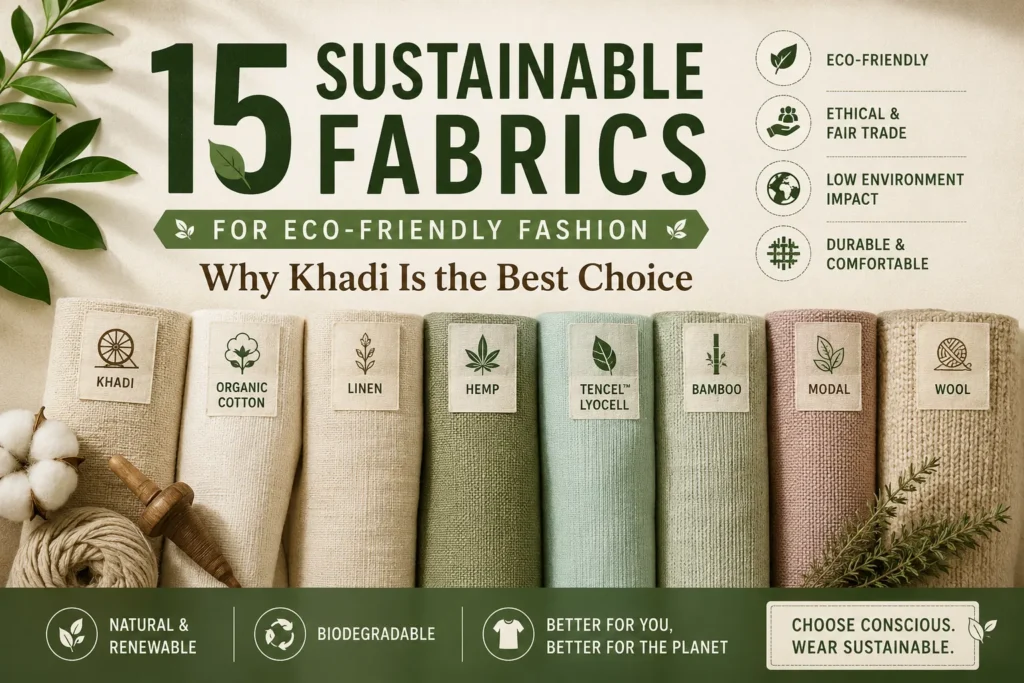
The way we choose clothing is changing. Today, more people want garments that are not only stylish and comfortable but also better for the environment. This growing awareness has increased the demand for sustainable fabrics that reduce pollution, conserve natural resources, and support ethical production.
The global fashion industry is one of the largest contributors to environmental pollution. Traditional textile production consumes enormous amounts of water, energy, and chemicals, while fast fashion creates millions of tonnes of textile waste every year. These challenges have encouraged consumers to look for eco-friendly alternatives that have a lower environmental impact without compromising quality or comfort.
Sustainable fabrics are made from renewable, biodegradable, or recycled materials using environmentally responsible production methods. They are designed to last longer, minimise waste, and often support fair working conditions. Choosing clothing made from these fabrics is a simple yet meaningful step towards building a more sustainable wardrobe.
Among the many sustainable textiles available today, Khadi holds a special place. Hand-spun and handwoven using traditional techniques, Khadi requires very little electricity during production and provides livelihoods to thousands of artisans across India. Its breathable texture, durability, and timeless appeal make it one of the most environmentally friendly fabrics available.
In this guide, you’ll discover the 15 most sustainable fabrics, learn how they compare, understand their advantages and limitations, and find out why Khadi continues to be one of the best choices for eco-conscious fashion.
What Are Sustainable Fabrics?
Sustainable fabrics are textiles that have a lower environmental and social impact throughout their lifecycle. They are produced using renewable resources, responsible farming or manufacturing practices, and processes that minimise pollution and waste.
Unlike conventional synthetic materials, many sustainable fabrics decompose naturally at the end of their lifespan, reducing landfill waste and microplastic pollution. They are also designed to be durable, allowing garments to be worn for many years instead of being discarded after a short period.
A fabric is generally considered sustainable when it meets several important criteria:
- Made from renewable or recycled raw materials.
- Requires less water and energy during production.
- Uses fewer harmful chemicals.
- Produces lower carbon emissions.
- Is biodegradable or recyclable.
- Supports ethical labour practices.
- Offers long-lasting durability.
However, sustainability is not determined by the fibre alone. The cultivation, processing, dyeing, transportation, and lifespan of the finished garment all contribute to its overall environmental impact.
Natural vs Synthetic Fabrics
Natural fabrics are derived from plants or animals, while synthetic fabrics are manufactured from petroleum-based chemicals.
Examples of natural sustainable fibres include:
- Khadi
- Organic cotton
- Hemp
- Linen
- Bamboo (mechanically processed)
- Wool
- Silk
Synthetic fabrics such as polyester, nylon, and acrylic are durable but are generally less sustainable because they rely on fossil fuels and release microplastics during washing. Recycled synthetic fabrics reduce waste but still have environmental limitations.
Why Sustainable Fabrics Matter
Choosing sustainable fabrics benefits both people and the planet. Every clothing purchase influences how natural resources are used and how textile workers are treated.
Reduces Environmental Pollution
Conventional textile production often releases harmful chemicals into rivers and consumes significant amounts of water. Sustainable fabrics use cleaner production methods that help reduce pollution and protect ecosystems.
Conserves Water
Many eco-friendly fibres require considerably less irrigation than conventional cotton. Choosing these materials helps preserve freshwater resources, which are becoming increasingly scarce in many parts of the world.
Lowers Carbon Emissions
Handcrafted and low-energy production methods reduce greenhouse gas emissions. Fabrics such as Khadi require minimal electricity because spinning and weaving are traditionally done by hand.
Minimises Textile Waste
Durable clothing lasts longer, reducing the need for frequent replacements. Biodegradable fabrics also break down naturally instead of remaining in landfills for decades.
Supports Ethical Employment
Many sustainable textile industries provide fair wages and preserve traditional craftsmanship. Purchasing handwoven fabrics directly supports artisan communities and rural livelihoods.
Offers Better Comfort
Natural fibres are generally more breathable and gentle on the skin. They regulate temperature more effectively than synthetic fabrics, making them ideal for India’s warm and humid climate.
How We Evaluated These Sustainable Fabrics
Not every eco-friendly fabric performs equally. Some are highly breathable but require more maintenance, while others are exceptionally durable but less biodegradable.
To provide a balanced comparison, we evaluated each fabric using the following criteria:
| Criteria | Why It Matters |
|---|---|
| Sustainability | Environmental impact during production |
| Water Usage | Amount of freshwater required |
| Energy Consumption | Electricity and fuel needed |
| Biodegradability | Ability to decompose naturally |
| Durability | Expected lifespan |
| Comfort | Breathability and softness |
| Maintenance | Ease of washing and care |
| Best Uses | Suitable clothing applications |
This comparison helps you select the fabric that best matches your lifestyle and sustainability goals.
Comparison Table of the 15 Most Sustainable Fabrics
| Fabric | Sustainability | Breathability | Durability | Biodegradable | Best For |
|---|---|---|---|---|---|
| Khadi | ⭐⭐⭐⭐⭐ | Excellent | Excellent | Yes | Everyday wear, festive wear |
| Organic Cotton | ⭐⭐⭐⭐☆ | Excellent | Good | Yes | Casual clothing |
| Linen | ⭐⭐⭐⭐⭐ | Excellent | Excellent | Yes | Summer wear |
| Hemp | ⭐⭐⭐⭐⭐ | Very Good | Excellent | Yes | Jackets, shirts |
| Tencel | ⭐⭐⭐⭐☆ | Excellent | Good | Yes | Premium fashion |
| Bamboo | ⭐⭐⭐⭐☆ | Excellent | Good | Usually | Sportswear |
| Modal | ⭐⭐⭐⭐☆ | Very Good | Good | Yes | Loungewear |
| Wool | ⭐⭐⭐⭐☆ | Good | Excellent | Yes | Winter clothing |
| Silk | ⭐⭐⭐☆☆ | Good | Good | Yes | Luxury wear |
| Recycled Cotton | ⭐⭐⭐⭐☆ | Good | Good | Yes | Everyday clothing |
| Recycled Polyester | ⭐⭐⭐☆☆ | Moderate | Excellent | No | Outdoor wear |
| Banana Fibre | ⭐⭐⭐⭐⭐ | Good | Good | Yes | Handmade textiles |
| Nettle Fabric | ⭐⭐⭐⭐⭐ | Good | Excellent | Yes | Traditional clothing |
| Piñatex | ⭐⭐⭐⭐☆ | Moderate | Good | Partially | Accessories |
| Cork Fabric | ⭐⭐⭐⭐☆ | Moderate | Excellent | Yes | Bags and wallets |
1. Khadi – The Heritage Fabric of Sustainable Fashion
Khadi is one of the world’s most environmentally friendly fabrics. Hand-spun and handwoven using traditional techniques, it requires very little electricity during production, making its carbon footprint significantly lower than many machine-made textiles.
Made primarily from cotton, silk, or wool fibres, Khadi combines natural comfort with exceptional durability. Its breathable weave keeps the body cool in summer and warm during cooler months, making it suitable for year-round wear in India.
Unlike mass-produced fabrics, every metre of Khadi reflects the skill of artisans who preserve centuries-old weaving traditions. Choosing authentic Khadi also supports rural employment and helps sustain local economies.
Advantages
- Minimal energy consumption
- Highly breathable
- Biodegradable
- Durable
- Supports artisan livelihoods
- Comfortable throughout the year
Limitations
- May wrinkle more than synthetic fabrics
- Premium handwoven varieties can cost more than machine-made textiles
Best For: Shirts, kurtas, sarees, dresses, jackets, office wear, festive clothing, and everyday fashion.
2. Organic Cotton
Organic cotton is grown without synthetic pesticides, chemical fertilisers, or genetically modified seeds. Farmers use natural farming methods that improve soil health while reducing water pollution.
Compared to conventional cotton, organic cotton has a smaller environmental footprint and is softer on sensitive skin. It remains one of the most popular sustainable fabrics because it offers the familiar comfort of cotton while supporting healthier agricultural practices.
Although it still requires significant water compared to some fibres like hemp or linen, certified organic farming methods reduce many of the environmental concerns associated with conventional cotton cultivation.
Best For: T-shirts, shirts, baby clothing, innerwear, casual fashion.
3. Linen
Linen is made from the flax plant, one of the oldest cultivated fibres in the world. Flax requires relatively little water and fewer pesticides, making linen an environmentally responsible choice.
Its natural breathability and moisture-wicking ability make linen ideal for hot and humid climates. Linen garments also become softer after repeated washing while maintaining excellent durability.
Although linen wrinkles easily, many people appreciate its relaxed and natural appearance.
Best For: Summer shirts, trousers, dresses, suits, home textiles.
4. Hemp
Hemp is widely regarded as one of the most sustainable fibres available. It grows quickly, requires minimal irrigation, naturally resists pests, and improves soil quality.
Hemp fabric is exceptionally strong, allowing garments to last for many years. Modern processing techniques have also made hemp softer and more comfortable than earlier versions.
Its durability makes it ideal for consumers who value long-lasting clothing over fast fashion.
Best For: Shirts, jackets, trousers, workwear, bags.
5. Tencel (Lyocell)
Tencel is produced from sustainably sourced wood pulp, usually eucalyptus trees. It is manufactured using a closed-loop system that recycles most of the water and solvents used during production.
The fabric is exceptionally smooth, breathable, and moisture absorbent, making it comfortable in warm weather. Tencel is also biodegradable under suitable conditions.
Because of its premium feel, it is commonly used in luxury fashion and bedding.
Best For: Premium shirts, dresses, sleepwear, activewear.
6. Bamboo Fabric
Bamboo grows rapidly without requiring large quantities of water or pesticides. Mechanically processed bamboo can be a highly sustainable fibre.
Bamboo fabric is naturally soft, breathable, and moisture-wicking. It also offers excellent comfort for sensitive skin.
However, some bamboo textiles undergo chemical-intensive processing. Choosing certified bamboo fabrics helps ensure better environmental standards.
Best For: Activewear, socks, underwear, towels, casual clothing.
7. Modal
Modal is a semi-synthetic fabric made from sustainably harvested beech trees. It is known for its silky texture, excellent breathability, and resistance to shrinking.
Compared with conventional rayon, responsibly produced modal generally has a lower environmental impact, especially when manufactured using closed-loop production methods.
Modal is frequently blended with cotton or other natural fibres to improve softness and durability.
Best For: Loungewear, T-shirts, sleepwear, undergarments.
8. Wool
Wool is a renewable natural fibre obtained from sheep and other animals. High-quality wool garments can last for decades when properly maintained, making them a sustainable investment.
Wool naturally regulates temperature, absorbs moisture, and resists odours. It is biodegradable and renewable, although responsible animal welfare and grazing practices remain important considerations.
Merino wool, in particular, offers exceptional softness without sacrificing durability.
Best For: Sweaters, coats, scarves, winter wear, outdoor clothing.
9. Silk
Silk is a natural protein fibre produced by silkworms and has been valued for centuries because of its luxurious appearance, soft texture, and elegant drape. Although traditional silk production has environmental and ethical considerations, responsibly produced silk from sustainable farms can be an eco-friendly choice.
Silk is biodegradable, durable, and naturally regulates temperature. It keeps you cool during warm weather while providing insulation in cooler conditions. Its premium quality makes it ideal for garments that are worn occasionally and maintained carefully, extending their lifespan.
When purchasing silk, look for brands that prioritise ethical sourcing and environmentally responsible production methods.
Advantages
- Natural and biodegradable
- Luxurious appearance
- Lightweight and breathable
- Long-lasting with proper care
Limitations
- Requires delicate washing
- Premium price
- Conventional production may raise ethical concerns
Best For: Sarees, scarves, formal wear, luxury garments, festive clothing.
10. Recycled Cotton
Recycled cotton is created by repurposing cotton waste from garment manufacturing or used clothing. Instead of producing new cotton, existing fibres are processed into yarn, reducing textile waste and conserving resources.
Using recycled cotton helps lower water consumption and minimises landfill waste. However, recycled fibres can be shorter than virgin cotton fibres, so they are often blended with new cotton or other fibres to improve strength.
Choosing recycled cotton clothing supports the circular economy by giving existing materials a second life.
Advantages
- Reduces textile waste
- Conserves water and resources
- Comfortable and breathable
- Supports circular fashion
Limitations
- Slightly lower durability when used alone
- Often blended with other fibres
Best For: T-shirts, sweatshirts, casual clothing, reusable bags.
11. Recycled Polyester
Recycled polyester is manufactured from recycled plastic bottles and discarded polyester garments. It reduces plastic waste and requires fewer raw petroleum resources than virgin polyester.
The fabric remains durable, wrinkle-resistant, and quick-drying, making it suitable for sportswear and outdoor clothing. However, recycled polyester can still release microplastics during washing, so using a microfibre-catching laundry bag or filter is recommended.
Although it is an improvement over conventional polyester, natural fibres generally remain the better option for maximum sustainability.
Advantages
- Reuses plastic waste
- Highly durable
- Lightweight
- Quick drying
Limitations
- Not biodegradable
- Can release microplastics
Best For: Sportswear, jackets, backpacks, outdoor clothing.
12. Banana Fibre
Banana fibre is extracted from the stems of banana plants after the fruit has been harvested. Since these stems are usually considered agricultural waste, transforming them into textiles creates additional value without requiring extra farmland.
Banana fibre is naturally biodegradable, strong, and breathable. It has been used in traditional textiles across Asia for centuries and is gaining popularity in sustainable fashion because of its low environmental impact.
Its unique texture also makes it suitable for handmade garments and home décor products.
Advantages
- Made from agricultural waste
- Biodegradable
- Strong natural fibre
- Supports rural industries
Limitations
- Limited commercial availability
- Slightly coarse texture
Best For: Handcrafted textiles, scarves, home furnishings, fashion accessories.
13. Nettle Fabric
Nettle fabric is produced from the fibres of the nettle plant. Historically used in Europe and parts of Asia, it is now returning as a sustainable textile due to its strength and low environmental requirements.
Nettle plants grow naturally with minimal irrigation and generally require fewer pesticides than many commercial crops. The resulting fabric is durable, breathable, and biodegradable.
Its linen-like texture makes it an attractive option for environmentally conscious consumers looking for long-lasting clothing.
Advantages
- Requires minimal water
- Durable
- Biodegradable
- Naturally breathable
Limitations
- Limited availability
- Higher production costs
Best For: Shirts, jackets, traditional garments, home textiles.
14. Piñatex
Piñatex is an innovative material made from pineapple leaf fibres, which are a by-product of pineapple farming. Instead of discarding the leaves after harvesting the fruit, they are processed into a leather alternative.
Piñatex helps reduce agricultural waste while providing an animal-free material for fashion accessories. Although additional processing is required, it remains a more sustainable option than conventional leather in many applications.
Advantages
- Utilises agricultural waste
- Animal-friendly
- Lightweight
- Durable
Limitations
- Not suitable for every clothing application
- Premium pricing
Best For: Bags, wallets, footwear, belts, fashion accessories.
15. Cork Fabric
Cork fabric is produced from the bark of cork oak trees without cutting down the tree. The bark naturally regenerates after harvesting, making cork one of the most renewable materials available.
Cork fabric is lightweight, water-resistant, durable, and biodegradable. It is primarily used in accessories rather than garments but demonstrates how renewable natural materials can replace synthetic alternatives.
Advantages
- Renewable resource
- Lightweight
- Water resistant
- Durable
- Biodegradable
Limitations
- Limited use in apparel
- Higher cost
Best For: Wallets, handbags, footwear, fashion accessories.
Why Khadi Stands Out Among Sustainable Fabrics
Every sustainable fabric has unique strengths, but Khadi remains one of the most environmentally responsible choices because it combines sustainability, comfort, cultural heritage, and social impact in a single fabric.
Unlike factory-produced textiles, Khadi is hand-spun and handwoven using traditional techniques that require very little electricity. This significantly reduces its carbon footprint compared to machine-made fabrics. At the same time, its production supports thousands of artisans, preserving traditional craftsmanship while generating rural employment.
Khadi also performs exceptionally well in India’s climate. Its breathable weave allows air to circulate freely, helping keep the body cool during hot summers while providing insulation during cooler weather. This versatility makes it suitable for year-round use.
Another important advantage is durability. High-quality Khadi garments become softer over time while maintaining their strength, allowing them to be worn for many years. This longer lifespan reduces the need for frequent replacements and supports a more sustainable approach to fashion.
Why Choose Khadi?
- Hand-spun and handwoven
- Minimal electricity used during production
- Naturally biodegradable
- Comfortable in all seasons
- Durable and long-lasting
- Supports rural artisans and traditional weaving communities
- Timeless style that never goes out of fashion
For consumers who value sustainability, quality, and heritage, Khadi remains one of the best fabric choices available today.
How to Choose the Right Sustainable Fabric
The ideal sustainable fabric depends on your lifestyle, climate, and clothing needs.
| Need | Recommended Fabric |
|---|---|
| Summer clothing | Khadi, Linen, Organic Cotton |
| Office wear | Khadi, Tencel, Linen |
| Everyday wear | Khadi, Organic Cotton, Hemp |
| Travel | Khadi, Bamboo, Tencel |
| Luxury occasions | Silk |
| Winter wear | Wool |
| Active lifestyle | Bamboo, Recycled Polyester |
| Eco-conscious shopping | Khadi, Hemp, Linen |
When buying clothing, consider more than just the fibre. Look at durability, comfort, maintenance, and how frequently you plan to wear the garment. A well-made piece that lasts for years is often more sustainable than a cheaper item that needs replacing after a few months.
How to Identify Genuine Sustainable Fabrics
As sustainable fashion becomes more popular, many brands use vague environmental claims that can confuse buyers. Knowing what to look for helps you make informed purchasing decisions.
Check the Fibre Content
Read the product label to identify the primary material. Fabrics made from natural or recycled fibres generally have a lower environmental impact than conventional synthetic materials.
Look for Trusted Certifications
Independent certifications provide greater confidence that environmental and social standards have been met.
Common certifications include:
- Global Organic Textile Standard (GOTS)
- OEKO-TEX® Standard 100
- Fairtrade Textile Standard
- Forest Stewardship Council (FSC) for responsibly sourced wood fibres
Research the Brand
Responsible brands are transparent about where their fabrics come from, how they are produced, and the working conditions of the people involved in manufacturing.
Avoid Greenwashing
Be cautious of terms such as “eco-friendly” or “green” if no evidence or certification supports these claims. Genuine sustainable brands usually provide clear information about materials and production methods.
Frequently Asked Questions
1. What is the most sustainable fabric?
There is no single answer because sustainability depends on farming, manufacturing, durability, and disposal. However, Khadi, hemp, and linen are widely recognised as some of the most sustainable natural fabrics.
2. Is Khadi more sustainable than conventional cotton?
Yes. Khadi uses minimal electricity during production, supports artisan livelihoods, and often has a lower carbon footprint because it is hand-spun and handwoven.
3. Which sustainable fabric is best for hot weather?
Khadi, linen, organic cotton, and bamboo are excellent choices because they are breathable and help regulate body temperature.
4. Are sustainable fabrics more expensive?
Some sustainable fabrics have a higher upfront cost, but their durability often provides better long-term value because they last longer than many fast-fashion alternatives.
5. Is bamboo fabric always eco-friendly?
Not always. Mechanically processed bamboo is generally more sustainable than chemically processed bamboo viscose. Choosing certified products is recommended.
6. Are sustainable fabrics biodegradable?
Many natural fibres such as Khadi, hemp, linen, organic cotton, wool, and silk are biodegradable when they are not heavily blended with synthetic materials.
7. Which fabric lasts the longest?
Hemp, Khadi, wool, and linen are among the most durable natural fabrics when properly maintained.
8. How should I care for sustainable clothing?
Wash garments using mild detergents, avoid excessive heat during drying, repair small damages when possible, and store clothing properly to extend its lifespan.
9. Why is Khadi considered eco-friendly?
Khadi is produced with minimal electricity, uses natural fibres, supports artisan communities, and is biodegradable, making it one of India’s most sustainable textiles.
10. Where can I buy authentic Khadi clothing?
Purchase from trusted Khadi retailers and reputable brands that clearly describe their weaving process, material quality, and sourcing practices.
Conclusion
Choosing sustainable fabrics is more than a fashion trend—it is a conscious decision that benefits the environment, supports ethical production, and encourages responsible consumption. Every purchase influences the demand for cleaner manufacturing practices and helps reduce the environmental impact of the textile industry.
From hemp and linen to Tencel and organic cotton, each sustainable fabric offers unique advantages. However, Khadi stands apart because it combines environmental responsibility with cultural heritage, artisan craftsmanship, and exceptional comfort. Its hand-spun and handwoven production process uses minimal energy while supporting skilled weaving communities across India.
If you are looking for clothing that reflects quality, sustainability, and timeless style, Khadi is an excellent choice. By investing in well-crafted garments made from sustainable fabrics, you not only build a longer-lasting wardrobe but also contribute to a more responsible future for fashion.
Explore Khadigram’s handcrafted Khadi collection to experience clothing that blends traditional craftsmanship with modern sustainability and discover how choosing the right fabric can make a lasting difference for both you and the planet.