
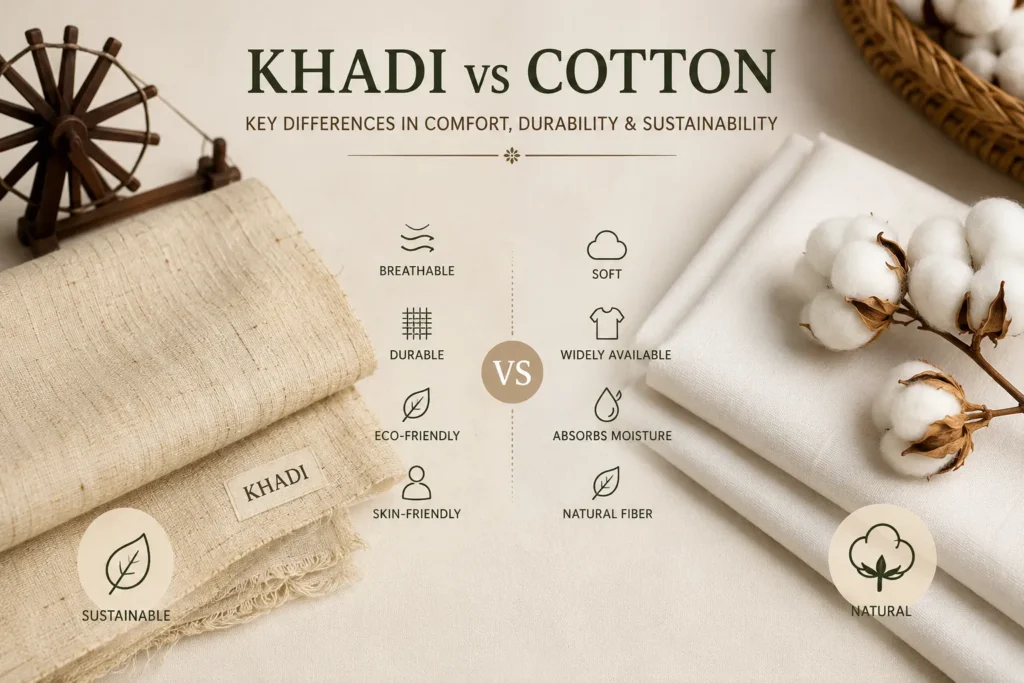
Compare Khadi vs Cotton in terms of comfort, breathability, durability, sustainability, maintenance, and value. Discover which fabric suits your lifestyle and clothing needs.
Introduction
Many people assume that Khadi and Cotton are the same because both originate from natural cotton fibres. However, the way these fibres are spun, woven, and finished creates significant differences in comfort, breathability, durability, sustainability, and overall value.
Khadi is a hand-spun and handwoven fabric crafted by skilled artisans using traditional techniques, while conventional Cotton fabric is generally produced through industrial spinning and machine weaving. These different production methods influence everything from airflow and thermal regulation to texture, environmental impact, and long-term performance.
As more people choose sustainable fashion and ethically made clothing, understanding the difference between Khadi vs Cotton has become increasingly important. Whether you are buying everyday clothing, traditional wear, or eco-friendly apparel, knowing how these fabrics compare will help you make a more confident purchasing decision.
In this guide, you’ll discover how Khadi and Cotton differ in terms of comfort, breathability, durability, sustainability, maintenance, cost, and authenticity. By the end, you’ll know which fabric best suits your lifestyle, budget, and clothing needs.
What Is Khadi?
Khadi is a traditional Indian fabric made from hand-spun yarn and handwoven textiles. Skilled artisans spin the yarn using a Charkha (spinning wheel) and weave it on handlooms, preserving craftsmanship and weaving techniques that have been passed down through generations.
Khadi gained prominence during India’s independence movement when Mahatma Gandhi promoted it as a symbol of self-reliance, rural empowerment, and economic independence. Today, it is recognised not only as a cultural heritage fabric but also as a sustainable textile that represents ethical fashion, artisan craftsmanship, and environmentally responsible production.
Unlike machine-made fabrics, every metre of authentic Khadi reflects the skill and dedication of the artisan who creates it. The traditional hand-spinning and hand-weaving process produces subtle natural variations in the yarn and weave, making every fabric unique rather than perfectly uniform.
One of Khadi’s most valued qualities is its natural comfort. The handcrafted weave creates microscopic air pockets that improve airflow, help absorb and release moisture efficiently, and naturally regulate body temperature. This allows Khadi to remain cool and breathable during hot weather while providing gentle insulation in cooler conditions, making it suitable for year-round wear.
Key Characteristics of Khadi
- Hand-spun yarn
- Handwoven construction
- Excellent breathability
- Natural thermal regulation
- Sustainable production
- Low carbon footprint
- Artisan-made authenticity
What Is Cotton Fabric?
Cotton fabric is one of the world’s most widely used natural textiles. It is made from cotton fibres that are typically machine-spun into yarn and machine-woven into fabric using modern textile manufacturing processes.
Textile mills use advanced machinery to produce Cotton efficiently, ensuring consistent quality, texture, and appearance across large production volumes. This large-scale manufacturing makes Cotton widely available, affordable, and suitable for everything from everyday clothing to home furnishings.
Cotton is valued for its softness, versatility, and ease of maintenance. Depending on the weave, fabric weight, and finishing process, Cotton can be used for lightweight summer clothing as well as garments designed for everyday use.
Common Uses of Cotton
- T-shirts
- Shirts
- Dresses
- Bedding
- Uniforms
- Home textiles
Key Characteristics of Cotton
- Machine-spun yarn
- Machine-woven fabric
- Smooth texture
- Consistent appearance
- Affordable pricing
- Easy maintenance
- Wide availability
Khadi vs Cotton at a Glance
Choosing between Khadi and Cotton becomes easier when you compare their key characteristics side by side. The table below provides a quick overview before we explore each aspect in greater detail.
|
Feature |
Khadi |
Cotton |
|
Production |
Hand-spun & handwoven |
Machine-spun & machine-woven |
|
Breathability |
Very High |
Moderate to High |
|
Thermal Regulation |
Excellent |
Moderate |
|
Durability |
Improves with age |
Gradual wear over time |
|
Sustainability |
Excellent |
Depends on production method |
|
Carbon Footprint |
Extremely Low |
Higher |
|
Water Consumption |
Lower |
Higher |
|
Texture |
Natural irregular texture |
Smooth and uniform texture |
|
Cost |
Higher upfront |
Lower upfront |
|
Authenticity |
Artisan-made |
Mass-produced |
|
Best For |
Sustainable fashion, traditional wear, long-term value |
Everyday wear, affordability, easy availability |
Comfort Comparison: Which Fabric Feels Better?
Comfort is often the first factor people consider when choosing clothing. Although both Khadi and Cotton are made from natural cotton fibres, their production methods create noticeable differences in breathability, temperature regulation, moisture management, and overall wearing experience.
Thermal Regulation
Khadi naturally regulates body temperature because its hand-spun yarn and handwoven structure create microscopic air pockets throughout the fabric. These air pockets improve air circulation, allowing excess body heat to escape during warm weather while providing gentle insulation when temperatures drop.
Cotton also offers a comfortable wearing experience, but its machine-woven structure is generally more uniform, providing less natural airflow than authentic Khadi. As a result, Khadi often adapts better to changing weather conditions and remains especially comfortable in hot and humid climates.
Why Is Khadi Comfortable in All Seasons?
Khadi remains comfortable throughout the year because its handcrafted weave creates tiny air pockets that support natural temperature regulation. During summer, these air pockets improve ventilation and help release excess heat. In cooler weather, they trap a thin layer of warm air close to the body, providing light insulation without making the fabric feel heavy.
Breathability
Khadi offers superior breathability because its handcrafted weave allows air to circulate more freely through the fabric. Better airflow helps reduce heat build-up, minimises excessive sweating, and keeps the fabric feeling fresh even after long hours of wear.
Cotton is also breathable, particularly lightweight cotton fabrics. However, Khadi’s naturally ventilated weave generally provides better airflow, making it a preferred choice for tropical and humid regions such as Kerala.
Skin Friendliness
Khadi often undergoes minimal processing and fewer chemical treatments than many commercially manufactured fabrics. Its natural fibres and breathable structure make it a popular choice for people with sensitive skin or those who prefer naturally made clothing.
Benefits of Khadi for Sensitive Skin
- Better ventilation
- Reduced chemical exposure
- Comfortable daily wear
- Gentle feel on sensitive skin
Moisture Absorption
Khadi absorbs sweat efficiently while allowing moisture to evaporate quickly through its breathable weave. This helps keep the fabric dry and comfortable throughout the day, even in warm and humid conditions.
Cotton also absorbs moisture well, but once it becomes damp, it generally takes longer to dry. Khadi’s combination of moisture absorption and improved airflow often provides a more comfortable wearing experience during extended use.
Durability Comparison: Which Fabric Lasts Longer?
Comfort may influence your first purchase, but durability determines how well a garment performs over years of regular use. Both Khadi and Cotton are durable natural fabrics, although their long-term performance depends on how they are produced, cared for, and worn.
Longevity
Khadi is known for its long-lasting quality. Unlike many machine-made fabrics, authentic Khadi often becomes softer and more comfortable with regular use while maintaining its strength. With proper care, a well-made Khadi garment can remain durable for many years, making it a worthwhile long-term investment.
Cotton is also a durable natural fabric and performs well for everyday wear. However, frequent washing and continuous use may gradually weaken the fibres, causing some garments to become thinner or lose their original texture over time. The lifespan of Cotton clothing also depends on the quality of the fabric and the manufacturing process.
Structural Integrity
One of the reasons Khadi is highly durable is its traditional production process. Hand-spinning places less mechanical stress on cotton fibres than high-speed industrial spinning, helping preserve more of the fibre’s natural strength. The handwoven construction also creates a fabric that is both flexible and resilient, allowing it to withstand regular use while maintaining its character.
Machine-spun Cotton is designed for consistency and efficient large-scale production. While this manufacturing process creates smooth and uniform fabrics, durability can vary depending on the quality of the cotton, weave, and finishing techniques used.
Shrinkage and Maintenance
|
Factor |
Khadi |
Cotton |
|
Initial Shrinkage |
3–5% |
2–5% |
|
Softness Over Time |
Improves |
May gradually reduce |
|
Fibre Strength |
Generally High |
Varies by fabric quality |
|
Care Requirement |
Gentle wash |
Standard wash |
Although Khadi may require slightly more care, gentle washing helps preserve its natural texture, strength, and appearance for years. Cotton is generally easier to maintain and can tolerate regular machine washing, making it a practical choice for everyday use.
Sustainability Comparison: Which Fabric Is More Eco-Friendly?
As consumers become more environmentally conscious, sustainability has become an important factor when choosing clothing. Both Khadi and Cotton are natural fabrics, but their production methods have different environmental and social impacts.
Environmental Impact
Khadi is widely recognised as one of the most sustainable traditional textiles because its production relies on hand-spinning and hand-weaving instead of energy-intensive industrial machinery. This traditional process requires minimal electricity and generally involves fewer manufacturing stages, helping reduce the overall environmental impact of fabric production.
Conventional Cotton fabric can also be a sustainable choice depending on how it is produced. However, large-scale textile manufacturing often relies on industrial machinery and processing methods that require more energy and resources than handcrafted Khadi.
Why Is Khadi Considered Sustainable?
Khadi is considered sustainable because it is produced through hand-spinning and hand-weaving, which require minimal electricity and generally involve fewer chemical treatments during fabric production. Beyond its environmental benefits, Khadi also supports skilled artisans, preserves traditional weaving techniques, and promotes a slower, more responsible approach to fashion.
Resource Conservation
Compared to conventional Cotton manufacturing, Khadi production generally requires:
- Less energy during fabric production
- Lower electricity consumption
- Fewer chemical treatments
- Reduced textile waste
- Greater reliance on traditional craftsmanship
These qualities make Khadi an appealing choice for people who want clothing that balances comfort with environmental responsibility.
Organic Khadi
Organic Khadi combines traditional craftsmanship with organically grown cotton fibres, creating a fabric that supports both sustainable farming and responsible textile production. When purchasing Organic Khadi, look for recognised certifications such as GOTS (Global Organic Textile Standard), which help verify that the cotton has been produced according to established organic textile standards.
Social Sustainability
Khadi is more than a fabric—it also supports the communities that create it. Every authentic Khadi purchase helps sustain:
- Rural employment
- Artisan livelihoods
- Traditional weaving skills
- Sustainable economic development
By choosing authentic Khadi, consumers contribute to preserving India’s rich textile heritage while supporting generations of skilled artisans who continue to keep this traditional craft alive.
Handmade Khadi vs Machine-Made Cotton
The most significant difference between Khadi and conventional Cotton fabric lies in how they are made. Khadi is produced through a traditional hand-spinning and hand-weaving process, while most commercially available Cotton fabrics are manufactured using industrial spinning and machine weaving. These different production methods influence the fabric’s texture, appearance, breathability, durability, and overall character.
Khadi
- Hand-spun yarn
- Handwoven fabric
- Natural slubs (small irregularities in the yarn)
- Slight weave variations
- Distinct handcrafted appearance
Every authentic Khadi fabric has its own unique character. Small variations in the weave, texture, and yarn are natural signs of handmade craftsmanship rather than manufacturing defects. These characteristics make every garment one of a kind while reflecting the skill and dedication of the artisan who created it.
Cotton
- Machine-spun yarn
- Machine-woven fabric
- Smooth, uniform texture
- Consistent weave
- Even finish
Machine-made Cotton is designed for consistency and large-scale production. Its uniform appearance makes it ideal for everyday clothing, uniforms, and garments where an identical finish is preferred.
Understanding these visible and structural differences makes it easier to distinguish authentic Khadi from machine-made alternatives and helps buyers make more informed purchasing decisions.
Cost and Value Comparison
Price is often one of the first things buyers compare. While Khadi generally costs more than conventional Cotton, understanding why it is priced differently helps reveal its long-term value.
Why Khadi Costs More
Khadi is typically priced higher because every stage of production involves skilled craftsmanship rather than large-scale automation. From hand-spinning the yarn to hand-weaving the fabric, artisans invest significant time, precision, and expertise into creating every metre of authentic Khadi.
Unlike mass-produced textiles, Khadi is produced in smaller quantities with greater attention to quality and traditional weaving techniques. The price reflects not only the fabric itself but also the craftsmanship, sustainability, and cultural heritage behind every garment.
Khadi production includes:
- Skilled artisan labour
- Hand-spinning
- Hand-weaving
- Small-scale production
These factors increase production costs while adding long-term value through durability, authenticity, and responsible craftsmanship.
Long-Term Value
Although Khadi generally has a higher initial purchase price, many people consider it a worthwhile long-term investment. Its durability, timeless appeal, and handcrafted quality often allow garments to remain comfortable and attractive for years with proper care.
Cotton offers excellent value for buyers looking for affordable, practical clothing that is widely available and easy to maintain. The best choice depends on your budget, lifestyle, and personal priorities.
|
Value Factor |
Khadi |
Cotton |
|
Initial Cost |
Higher |
Lower |
|
Long-Term Durability |
High |
Moderate to High |
|
Sustainability Value |
High |
Moderate |
|
Craftsmanship |
Handcrafted by skilled artisans |
Machine-manufactured with consistent quality |
|
Cultural Value |
High |
Moderate |
When comparing value, consider more than just the purchase price. Comfort, durability, sustainability, maintenance, and how frequently you plan to wear the garment all contribute to its overall value over time.
How to Identify Genuine Khadi
Buying authentic Khadi can sometimes be challenging because many machine-made fabrics are marketed as “Khadi-style” or “Khadi look.” Understanding the key characteristics of genuine Khadi helps you make an informed purchase and appreciate the craftsmanship behind every handmade fabric.
Authentic Khadi Checklist
Look for these characteristics when identifying authentic Khadi:
 Hand-spun yarn
- Handwoven construction
- Natural slubs (small irregularities in the yarn)
- Slight texture and weave variations
- Matte finish instead of a glossy appearance
- Artisan-made origin
- Authentic Khadi certification or trusted seller information
These natural variations are a hallmark of handcrafted production and should not be mistaken for defects. They reflect the individuality of the weaving process and make every piece of authentic Khadi unique.
Common Signs of Imitations
Be cautious if you notice the following:
 Perfectly uniform texture
- Completely identical weave patterns
- No visible yarn variation
- No information about the fabric’s origin
- Lack of certification or trusted product details
Machine-made fabrics can closely resemble Khadi in appearance, but they usually lack the subtle handcrafted characteristics created through traditional hand-spinning and hand-weaving.
Authentic Khadi always displays small natural variations that reflect genuine artisan craftsmanship.
Khadi vs Cotton: Which One Should You Choose?
The right choice depends on your lifestyle, budget, and personal preferences. Both Khadi and Cotton are natural fabrics with their own strengths, so choosing the better option comes down to what matters most to you.
|
Choose Khadi If |
Choose Cotton If |
|
Sustainability matters to you |
Budget is your top priority |
|
You appreciate artisan-made clothing |
You need affordable everyday wear |
|
You value long-term durability |
You prefer widely available clothing |
|
You want year-round comfort |
You prefer smooth, uniform fabrics |
|
You support ethical and sustainable fashion |
You want easy maintenance and convenience |
|
You enjoy traditional craftsmanship |
You need clothing for regular daily use |
Quick Recommendation
- Choose Khadi if you want sustainable, breathable, handcrafted clothing that offers long-term value while supporting traditional artisans.
- Choose Cotton if affordability, convenience, and easy maintenance are your primary priorities.
- Still unsure? If you live in a hot and humid climate like Kerala and value comfort alongside sustainability, authentic Khadi is often the better choice.
If you value handcrafted quality, sustainability, breathability, and timeless craftsmanship, Khadi is an excellent long-term choice. If affordability, convenience, and everyday practicality are more important, Cotton remains a reliable option.
Ultimately, both fabrics offer unique advantages. Understanding their differences helps you choose clothing that best matches your lifestyle, comfort preferences, and values.
Frequently Asked Questions (FAQs)
Is Khadi better than Cotton?
Khadi and Cotton each have their own advantages. Khadi is known for its breathability, thermal regulation, sustainability, and handcrafted quality, making it an excellent choice for people who value comfort and ethical fashion. Cotton is generally more affordable, widely available, and easy to maintain. The better fabric depends on your lifestyle, budget, and clothing needs.
Why is Khadi more expensive than Cotton?
Khadi is produced through a labour-intensive process that involves hand-spinning and hand-weaving by skilled artisans. Unlike machine-made Cotton, every stage of production requires time, craftsmanship, and attention to detail. The higher price reflects the fabric’s authenticity, durability, and the traditional skills involved in its creation.
Does Khadi last longer than Cotton?
With proper care, authentic Khadi can remain durable for many years and often becomes softer with regular use. Cotton is also a durable natural fabric, but its lifespan depends on the fabric quality, manufacturing process, and how frequently it is worn and washed.
Is Khadi suitable for summer?
Yes. Khadi’s breathable handwoven structure allows better air circulation, helping reduce heat build-up and keeping the wearer comfortable in hot and humid weather. This makes it a popular choice for summer clothing and tropical climates like Kerala.
Can Khadi be worn in winter?
Yes. The natural air pockets created during hand-spinning and hand-weaving help trap a thin layer of warm air, providing gentle insulation during cooler weather. This allows Khadi to remain comfortable across different seasons.
Does Khadi shrink after washing?
Like many natural fabrics, Khadi may shrink slightly after the first few washes. Typical shrinkage ranges from 3–5%. Following the recommended washing instructions helps minimise shrinkage and preserve the fabric’s quality.
Is Khadi environmentally friendly?
Khadi is widely recognised as an environmentally responsible fabric because it is produced through hand-spinning and hand-weaving, which require minimal electricity and generally involve fewer industrial processes. It also supports artisan communities and promotes more sustainable textile production.
How can I identify authentic Khadi?
Look for characteristics such as hand-spun yarn, handwoven construction, natural slubs, slight texture variations, and a matte finish. Purchasing from trusted sellers and checking for authentic certification or product information can also help you identify genuine Khadi.
Is Organic Khadi available?
Yes. Organic Khadi combines traditional hand-spinning and hand-weaving with organically grown cotton fibres. When purchasing Organic Khadi, look for recognised certifications, such as GOTS (Global Organic Textile Standard), to verify organic textile standards.
Which is more breathable: Khadi or Cotton?
Both fabrics are breathable, but authentic Khadi generally offers better airflow because its handcrafted weave creates natural air pockets within the fabric. This improved ventilation helps keep the fabric cooler and more comfortable, particularly in warm and humid conditions.
Transition to Conclusion
Whether you prioritise sustainability, comfort, affordability, or long-term value, understanding the differences between Khadi and Cotton helps you choose clothing that best suits your lifestyle and personal preferences.
Both fabrics offer unique benefits, and the right choice depends on what matters most to you. By considering factors such as comfort, durability, maintenance, environmental impact, and budget, you can confidently select a fabric that meets your everyday needs while reflecting your values.
Conclusion
Khadi and Cotton may originate from the same natural cotton fibre, but they offer distinctly different benefits. Khadi stands out for its handcrafted craftsmanship, exceptional breathability, natural thermal regulation, durability, and sustainable production, making it an excellent choice for people who value comfort, ethical fashion, and long-term quality.
Cotton remains a dependable option for those seeking affordability, versatility, and easy maintenance. Its widespread availability and practicality make it well suited for everyday clothing and a variety of lifestyle needs.
Ultimately, the right choice depends on your priorities. If you value artisan craftsmanship, environmental responsibility, and clothing that combines tradition with lasting comfort, authentic Khadi offers benefits that extend beyond the fabric itself. If affordability and convenience are your primary considerations, Cotton continues to be a reliable everyday choice.
At Khadigram, we are committed to preserving the rich tradition of authentic Khadi while making it relevant for modern lifestyles. Our carefully curated collections celebrate the skill of Indian artisans, combining timeless craftsmanship with contemporary comfort and design. When you choose authentic Khadi, you are not only investing in a high-quality fabric but also supporting rural artisans, preserving centuries-old weaving traditions, and encouraging a more sustainable future for fashion.
Explore More from Khadigram
- Benefits of Khadi Fabric
- Organic Khadi Clothing Guide
- How to Identify Genuine Khadi
- Khadi Summer Wear Collection
- Khadi Fabric Care Guide
- Sustainable Fashion in India