
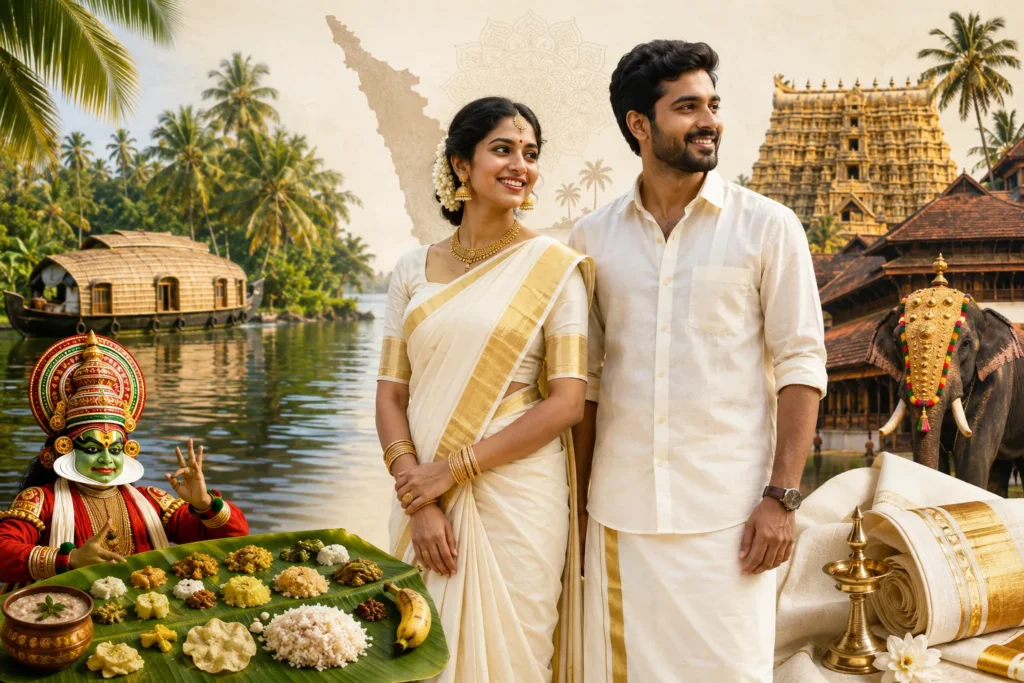
Kerala, often called God’s Own Country, is celebrated for its breathtaking landscapes, rich traditions, and vibrant cultural heritage. From the serene backwaters of Alleppey to the lush tea gardens of Munnar, Kerala offers a unique blend of natural beauty and timeless customs. At the heart of this heritage lies the Traditional Kerala Dress Code, which reflects the state’s history, climate, and cultural identity.
In this complete guide, we will explore Kerala’s traditional attire for men and women, wedding customs, festivals, cuisine, architecture, arts, and travel traditions. Whether you are a tourist, a fashion enthusiast, or someone looking to understand Kerala’s heritage, this article will give you a deep insight into the culture that makes Kerala truly special.
What Is the Traditional Kerala Dress Code?
The traditional Kerala dress code is a reflection of simplicity, elegance, and cultural pride. Unlike many other Indian states, Kerala’s traditional clothing is characterized by white or cream-colored fabrics with golden borders, symbolizing purity, prosperity, and grace.
For women, the most iconic attire is the Kasavu Saree or Settu Mundu, while men traditionally wear the Mundu paired with a Jubba or Kurta. These garments are not only worn during festivals and weddings but also hold a significant place in Kerala’s daily life and religious ceremonies.
Historical Roots of Kerala Attire
Kerala’s traditional clothing has evolved over centuries, influenced by the state’s tropical climate and cultural exchanges. The use of lightweight cotton and handwoven fabrics was practical for Kerala’s hot and humid weather. Over time, these garments became symbols of cultural identity and social status.
Cultural Significance
Traditional attire is deeply connected to Kerala’s festivals, religious rituals, and family celebrations. Wearing a Kasavu saree during Onam or a Mundu during a temple festival is not just about fashion—it is about honoring Kerala’s heritage and traditions.
Traditional Kerala Dress for Women
Kasavu Saree
The Kasavu Saree is the most recognizable traditional attire for women in Kerala. It is typically made of white or off-white cotton fabric with a golden zari border, known as Kasavu.
Why Kasavu Sarees Are Special
- Worn during Onam, Vishu, weddings, and temple festivals.
- Symbolizes purity, elegance, and cultural pride.
- Available in traditional and modern designer variations.
- Often paired with gold jewelry and jasmine flowers.
Settu Mundu (Mundum Neriyathum)
The Settu Mundu is a traditional two-piece attire worn by women in Kerala. It consists of a lower garment called Mundu and an upper cloth called Neriyathu.
This attire is considered one of the oldest forms of Kerala clothing and is still worn during festivals and cultural events. The Settu Mundu is especially popular during Onam, where women dress in this elegant outfit to celebrate Kerala’s harvest festival.
Blouse Styles and Accessories
Traditional Kerala attire is complemented by simple yet elegant accessories:
- Blouse styles: Elbow-length or short-sleeved blouses in matching colors.
- Temple jewelry: Traditional gold ornaments such as Manga Mala and Palakka Mala.
- Jasmine flowers: Worn in the hair to enhance the traditional look.
- Minimal makeup: Natural makeup is preferred to maintain the simplicity of Kerala fashion.
Traditional Kerala Dress for Men
Mundu
The Mundu is the traditional garment worn by men in Kerala. It is a white or cream-colored cloth wrapped around the waist, similar to a dhoti.
Types of Mundu
- Single Mundu: Plain white cotton Mundu for daily wear.
- Kasavu Mundu: Mundu with a golden border, worn during ceremonies.
- Khadi Mundu: Handwoven Khadi Mundu, known for its comfort and sustainability.
How to Wear a Mundu
Wearing a Mundu requires skill and practice. It is wrapped around the waist and tucked in securely. During formal occasions, the Mundu is usually worn full-length, while for casual settings, it may be folded up for ease of movement.
Jubba or Kurta
A Jubba or Kurta is often worn with the Mundu during weddings, festivals, and religious ceremonies. White, cream, and pastel-colored Kurtas are the most popular choices.
Angavastram
The Angavastram is a traditional shoulder cloth worn by men during formal and religious occasions. It adds a touch of dignity and elegance to the traditional Kerala attire.
Kerala Traditional Dress Code for Weddings
Kerala weddings are known for their simplicity, elegance, and cultural richness. The dress code varies slightly among Hindu, Christian, and Muslim communities, but traditional attire remains an integral part of the celebrations.
Hindu Weddings
In Hindu weddings, the bride usually wears a Kasavu Saree or a heavily embellished Kerala saree, while the groom wears a Kasavu Mundu paired with a Jubba.
Key features:
- White and gold color theme.
- Traditional gold jewelry.
- Jasmine flowers for the bride.
- Simple yet elegant styling.
Christian Weddings
Christian brides in Kerala often wear white wedding gowns, but traditional Kerala-style jewelry and hairstyles are incorporated into the bridal look. Grooms may wear suits or traditional Mundu and Kurta combinations.
Muslim Weddings
Muslim weddings in Kerala feature elegant modest attire with bright festive colors. Women may wear sarees, salwar suits, or lehengas, while men wear traditional Mundu or formal ethnic wear.
Kerala Festivals and Traditional Attire
Onam Celebrations
Onam is Kerala’s most celebrated festival, and traditional attire plays a central role in the festivities. Women wear Kasavu sarees or Settu Mundu, while men wear Mundu and Kurta.
The white and gold attire perfectly complements the festive atmosphere of Onam, symbolizing joy, prosperity, and cultural unity.
Vishu and Temple Festivals
During Vishu and temple festivals, people wear traditional clothing as a mark of respect and devotion. Modest attire is preferred, especially when visiting temples.
Kerala Cuisine: A Taste of God’s Own Heritage
Kerala’s cuisine is as rich and diverse as its culture. The state’s food is known for its use of coconut, rice, spices, and fresh seafood.
Core Ingredients
- Coconut and coconut oil
- Rice
- Black pepper
- Cardamom
- Cloves and cinnamon
Traditional Dishes
Sadya
A Sadya is a grand vegetarian feast served on a banana leaf, especially during Onam. It includes a variety of curries, pickles, rice, and desserts.
Seafood Delicacies
Kerala is famous for its seafood dishes, including fish curry, prawns, and crab preparations, often flavored with coconut and spices.
Vegetable Curries
Traditional vegetable curries such as Avial, Thoran, and Olan are staple dishes in Kerala cuisine.
Kerala Textile Crafts and Weaving Traditions
Kerala’s textile heritage is renowned for its handwoven fabrics and intricate craftsmanship.
Handwoven Kasavu Weaving
Kasavu weaving is a traditional art form that produces the iconic white and gold Kerala sarees. The golden border is woven with zari, giving the saree its distinctive appearance.
Famous Weaving Centers
- Balaramapuram: Known for fine cotton and Kasavu weaving.
- Chendamangalam: Famous for traditional handloom products.
- Kuthampully: Renowned for Kerala sarees and temple textiles.
Khadi and Kerala Heritage
Khadi is an integral part of Kerala’s textile tradition. Handwoven Khadi garments are breathable, eco-friendly, and perfectly suited for Kerala’s humid climate. Brands like Khadigram help preserve this heritage by offering authentic Khadi clothing that combines tradition with modern comfort.
Jewelry and Accessories in Kerala Traditional Attire
Kerala’s traditional jewelry is known for its intricate designs and cultural significance.
Popular Jewelry Styles
- Temple Jewelry: Inspired by temple art and mythology.
- Manga Mala: A necklace with mango-shaped motifs.
- Palakka Mala: A necklace featuring green stone pendants.
- Elakkathali Mala: A traditional bridal necklace.
These ornaments are often worn with Kasavu sarees during weddings and festivals, enhancing the elegance of the attire.
Kerala Architecture and Heritage Landmarks
Kerala’s architecture reflects its tropical climate, cultural values, and artistic excellence.
Residential Style
Traditional Kerala homes, known as Nalukettu, are built around a central courtyard. These houses feature wooden structures, sloping roofs, and intricate carvings.
Religious Sites
Kerala’s temples are famous for their detailed woodwork, mural paintings, and towering Gopuram entrance structures.
Historic Landmarks
- Padmanabhapuram Palace: A masterpiece of wooden architecture.
- Mattancherry Palace: Also known as the Dutch Palace.
- Hill Palace: A historic palace complex showcasing Kerala’s royal heritage.
Kerala Arts and Literature
Kerala has a rich tradition of performing arts, music, and literature.
Performing Arts
Kathakali
A classical dance-drama known for its elaborate costumes and expressive makeup.
Mohiniyattam
A graceful classical dance form performed by women.
Theyyam
A ritual art form that combines dance, music, and worship.
Koodiyattam
One of the oldest surviving Sanskrit theater traditions in the world.
Music and Literature
Kerala’s musical heritage includes Sopana Sangeetham and Carnatic music. The state is also home to great literary figures such as Ezhuthachan and Vallathol, who contributed immensely to Malayalam literature.
Travel and Climate: Experiencing Kerala’s Heritage
Best Time to Visit Kerala
- Winter (November to February): Ideal for sightseeing and outdoor activities.
- Monsoon (June to September): Perfect for experiencing Kerala’s lush greenery and Ayurvedic treatments.
Top Attractions
- Alleppey Backwaters: Famous for houseboat cruises.
- Munnar Tea Gardens: Known for scenic landscapes.
- Periyar Wildlife Sanctuary: Home to diverse wildlife.
Packing Essentials
- Breathable cotton and linen clothing.
- Temple-appropriate modest wear.
- Rain gear during the monsoon season.
- Comfortable walking shoes or sandals.
Why Khadi Fits Perfectly with Kerala’s Traditional Fashion
Khadi is more than just a fabric—it is a symbol of sustainability, craftsmanship, and cultural pride. In Kerala, Khadi clothing is highly valued for its comfort and authenticity.
Benefits of Khadi in Kerala
- Breathable: Ideal for Kerala’s hot and humid climate.
- Eco-friendly: Made from natural fibers with minimal environmental impact.
- Handcrafted: Supports local artisans and traditional weaving communities.
- Timeless: Blends seamlessly with Kerala’s traditional fashion aesthetics.
Khadigram offers a wide range of authentic Khadi garments, including Khadi sarees, Mundu, Kurtas, and traditional Kerala attire. By choosing Khadi, you not only embrace comfort and style but also contribute to preserving Kerala’s rich textile heritage.
Conclusion: Preserving Kerala’s Cultural Legacy
Kerala’s traditional dress code is a beautiful expression of the state’s cultural identity. From the elegant Kasavu saree to the dignified Mundu, these garments carry centuries of history, craftsmanship, and tradition.
Beyond clothing, Kerala’s cuisine, architecture, arts, literature, and festivals together form the essence of God’s Own Heritage. By understanding and preserving these traditions, we keep alive the spirit of Kerala for future generations.
Whether you are attending an Onam celebration, a Kerala wedding, or simply exploring the state’s culture, traditional Kerala attire offers a timeless connection to this extraordinary heritage. Explore Khadigram’s authentic Khadi and Kerala traditional wear collections to experience the perfect blend of tradition, comfort, and elegance.
What is the traditional dress code of Kerala?
The traditional dress code of Kerala includes the Kasavu saree and Settu Mundu for women, and the Mundu paired with a Jubba or Kurta for men. These outfits are commonly worn during festivals, weddings, and cultural ceremonies.
What do women traditionally wear in Kerala?
Women in Kerala traditionally wear the Kasavu saree or Settu Mundu, which are usually white or cream-colored garments with a golden border. These outfits symbolize purity, elegance, and Kerala’s cultural heritage.
What do men traditionally wear in Kerala?
Men traditionally wear a Mundu, a white or cream-colored cloth wrapped around the waist, often paired with a Jubba, Kurta, or Angavastram during formal occasions.
What is a Kasavu saree?
A Kasavu saree is a traditional Kerala saree made of white or off-white fabric with a golden zari border. It is popularly worn during Onam, Vishu, weddings, and other cultural celebrations.
What is the difference between a Kasavu saree and Settu Mundu?
A Kasavu saree is a single-piece saree with a golden border, while a Settu Mundu is a traditional two-piece attire consisting of a lower garment (Mundu) and an upper cloth (Neriyathu).
Why is white and gold significant in Kerala traditional clothing?
White and gold are significant because they symbolize purity, prosperity, simplicity, and elegance. These colors are deeply associated with Kerala’s festivals, weddings, and cultural traditions.
What is the traditional Kerala dress code for Onam?
During Onam, women usually wear Kasavu sarees or Settu Mundu, while men wear Mundu with a Kurta or Jubba. The white and gold attire is an iconic part of Onam celebrations.
Can tourists wear traditional Kerala attire?
Yes, tourists are welcome to wear traditional Kerala attire, especially during festivals, weddings, and cultural events. Wearing a Kasavu saree or Mundu is a respectful way to experience Kerala’s heritage.
What is the best fabric for traditional Kerala clothing?
Cotton and Khadi are the best fabrics for traditional Kerala clothing because they are lightweight, breathable, and comfortable in Kerala’s hot and humid climate.
How do you wear a Mundu correctly?
A Mundu is wrapped around the waist and tucked securely. For formal occasions, it is worn full-length, while for casual settings, the lower part may be folded up for ease of movement.
What jewelry is worn with traditional Kerala attire?
Traditional Kerala attire is often paired with Temple Jewelry, Manga Mala, Palakka Mala, Elakkathali Mala, gold bangles, and jasmine flowers for a complete cultural look.
Why is Kerala called God’s Own Country?
Kerala is called God’s Own Country because of its breathtaking natural beauty, rich cultural heritage, serene backwaters, lush greenery, and unique traditions that make it one of India’s most admired destinations.