
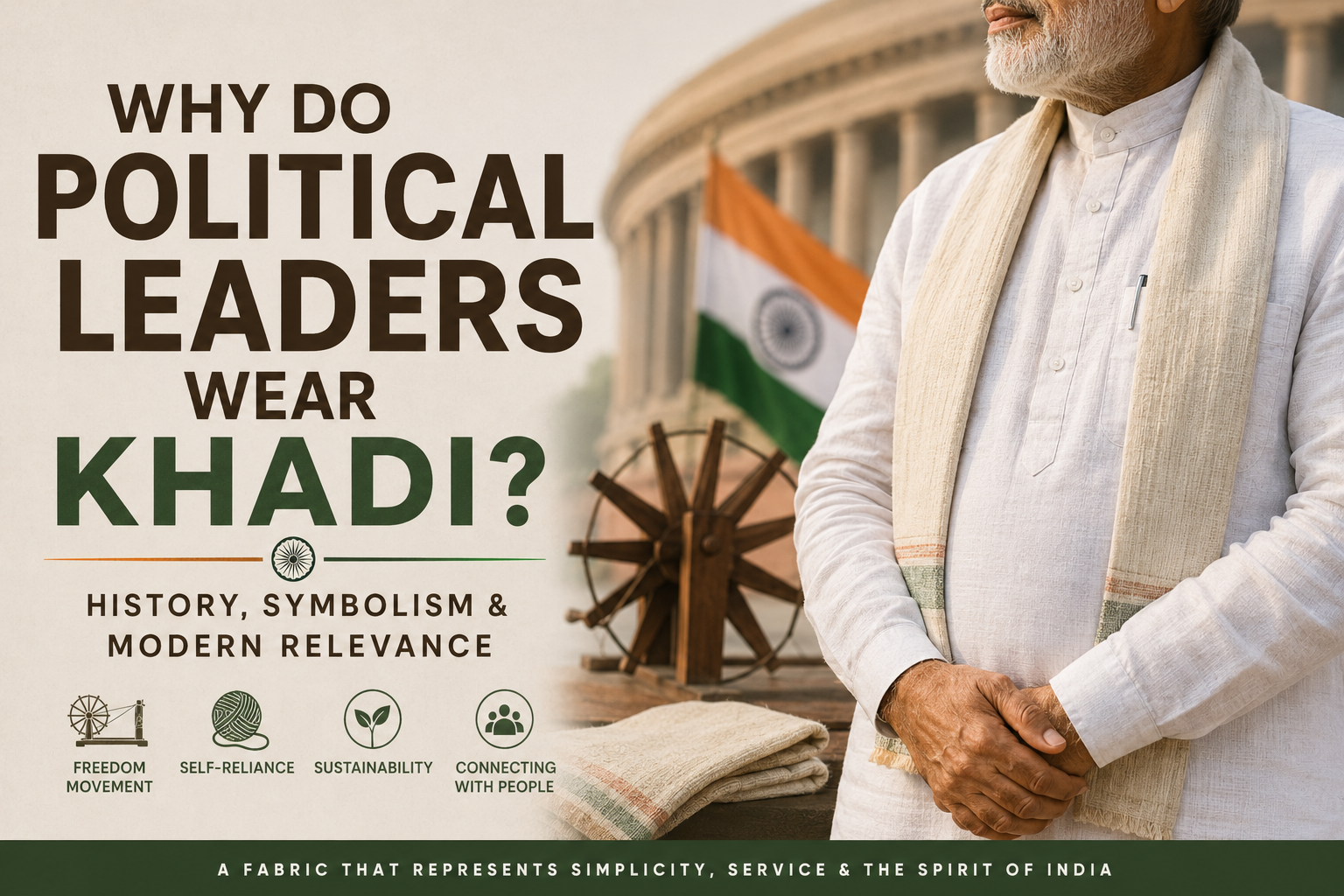
Why Do Political Leaders Wear Khadi? History, Symbolism & Modern Relevance
“Khadi is the livery of our freedom.”
— Mahatma Gandhi
Walk into any election rally, parliamentary session, or government event in India, and you’ll notice a familiar style among many political leaders—a crisp white Khadi kurta, a Nehru jacket, or a simple handwoven shirt. This choice is not driven by fashion trends alone. For decades, Khadi has represented honesty, humility, service, and a deep connection with India’s people and culture.
Unlike machine-made fabrics, Khadi is hand-spun and handwoven by skilled artisans using natural fibres such as cotton, silk, or wool. Every thread reflects traditional craftsmanship and supports rural communities that have preserved this heritage for generations. Wearing Khadi is not only a style statement but also a way to celebrate Indian craftsmanship while promoting sustainable fashion.
The relationship between Khadi and Indian politics began during the country’s freedom struggle. What started as a movement against imported British textiles gradually became one of the strongest symbols of self-reliance and national unity. Even today, many political leaders continue wearing Khadi because it reflects values that citizens respect and trust.
In this guide, you’ll discover why political leaders continue choosing Khadi, what the fabric symbolizes, why white Khadi is so common in politics, and how this traditional textile remains relevant in modern India. You’ll also learn how to identify authentic Khadi and why choosing genuine handcrafted garments supports India’s artisans and textile heritage.
Why Do Political Leaders Wear Khadi?
Political leaders wear Khadi because it symbolizes simplicity, honesty, public service, and national identity. The tradition began during India’s freedom movement when Mahatma Gandhi promoted Khadi as a symbol of self-reliance and economic independence. Today, leaders continue wearing Khadi because it reflects humility, supports Indian artisans, promotes sustainable fashion, and helps them connect with ordinary citizens.
Political leaders choose Khadi because it reflects values that people admire in public representatives. Simplicity, honesty, humility, and dedication to public service are qualities closely associated with Khadi. By wearing this traditional fabric, leaders communicate that they value Indian heritage and remain connected with the people they serve.
Khadi became popular during India’s struggle for independence when Mahatma Gandhi encouraged citizens to wear hand-spun cloth instead of imported British textiles. The movement aimed to strengthen India’s economy by supporting local artisans and reducing dependence on foreign goods. As a result, Khadi became much more than a fabric—it became a symbol of patriotism and self-reliance.
Even after independence, many political leaders continued wearing Khadi because it reflected the principles on which modern India was built. Today, it remains one of the most recognizable forms of political attire, representing leadership rooted in service rather than status.
Why Khadi Still Represents Leadership
Leadership is often judged by actions, but appearance also shapes public perception. Clothing sends a message before a leader speaks, and Khadi has become one of India’s strongest visual symbols of responsible leadership.
Unlike luxurious fabrics that may suggest wealth or exclusivity, Khadi projects simplicity and authenticity. It helps leaders appear approachable and relatable while reinforcing values such as discipline, equality, and public service. These qualities continue to influence how citizens view political leadership.
Khadi also represents responsibility beyond politics. The fabric is hand-spun, handwoven, biodegradable, and produced with minimal environmental impact. Choosing Khadi demonstrates support for sustainable living while helping preserve India’s traditional weaving industry.
Another reason Khadi remains important is its cultural significance. Every handcrafted garment reflects the dedication of skilled artisans who continue centuries-old weaving traditions. When political leaders wear authentic Khadi, they help promote India’s textile heritage and encourage people to value handmade craftsmanship.
Today, Khadi is more than a political uniform. It represents ethical leadership, sustainability, and pride in India’s cultural identity.
What Khadi Symbolizes in Indian Politics
Simplicity Over Luxury
One of the main reasons political leaders wear Khadi is the message it communicates. Khadi symbolizes simplicity rather than luxury. In public life, citizens often expect their leaders to appear humble, responsible, and focused on serving the nation instead of displaying personal wealth. A simple Khadi kurta or shirt reflects these expectations naturally.
This symbolism began during India’s freedom movement. National leaders chose Khadi to reject imported British goods and support locally made products. Their clothing represented commitment to the country’s progress rather than personal comfort or fashion. Over time, this simple fabric became closely associated with honesty, sacrifice, and dedication.
Even today, Khadi continues to reinforce these values. It reminds people that leadership is built on service, integrity, and responsibility. While clothing alone cannot define a person’s character, it can strengthen the message a leader wishes to communicate.
Khadi also reflects confidence without extravagance. Its elegant simplicity has made it a timeless choice for political leaders who want their actions to receive more attention than their appearance.
Connecting with Ordinary Citizens
Political leaders spend much of their time meeting people from villages, towns, and cities across the country. Their clothing often becomes part of their identity, and Khadi helps them create an immediate connection with ordinary citizens.
Unlike expensive designer clothing, Khadi has always been associated with the common people. Farmers, artisans, teachers, freedom fighters, and community leaders have worn it for generations. This shared history makes Khadi a powerful symbol of equality and accessibility.
Every authentic Khadi garment carries the story of Indian farmers, spinners, weavers, and craftspeople. When leaders wear Khadi, they recognize the importance of these communities while supporting India’s traditional textile industry.
Khadi also represents unity. During the freedom struggle, people from different religions, languages, and social backgrounds wore the same fabric in support of a common cause. That legacy continues today, reminding citizens that leadership should bring people together instead of creating divisions.
This deep emotional connection explains why Khadi remains one of the most respected symbols of public life in India. It allows leaders to express humility while celebrating India’s heritage and craftsmanship.
Why White Khadi Is the Preferred Choice for Politicians
The Meaning Behind the White Color
Although Khadi is available in many colours today, white remains the most popular choice among political leaders. The colour white has long represented peace, honesty, purity, and transparency in Indian culture. When combined with Khadi, it creates a powerful image of simplicity, integrity, and public service.
During India’s freedom movement, many national leaders chose white Khadi because it reflected the values they wanted to promote. It symbolized truth, equality, discipline, and a commitment to serving the nation rather than pursuing personal wealth. Over time, this simple style became closely associated with Indian politics and continues to influence how political leaders dress today.
White Khadi also creates a professional and dignified appearance without looking extravagant. It allows leaders to maintain a respectful public image while keeping the focus on their work instead of their clothing. This understated elegance has made white Khadi a timeless choice across generations.
Another reason white Khadi remains popular is its universal appeal. Regardless of political ideology, many leaders choose white because it represents neutrality, calmness, and respect. It has become one of the most recognizable forms of political attire in India.
Practical Benefits of White Khadi
The popularity of white Khadi is not based only on symbolism. It also offers practical advantages that suit the demanding lifestyle of political leaders.
India experiences long summers and humid weather in many regions. Khadi is naturally breathable because it is hand-spun and handwoven using natural fibres. Its loose weave allows air to circulate freely, helping the body stay cool throughout the day. White fabric reflects sunlight instead of absorbing heat, making it even more comfortable during outdoor meetings, election campaigns, and public events.
Khadi is also highly absorbent. It manages moisture effectively and feels comfortable even during long working hours. Unlike synthetic fabrics, authentic Khadi becomes softer with every wash while maintaining its strength and durability.
Another advantage is its versatility. A white Khadi kurta can be paired with a Nehru jacket for official functions or worn on its own for public meetings and community events. This flexibility makes it a practical wardrobe choice for leaders who attend a wide range of occasions.
The combination of comfort, elegance, and symbolism explains why white Khadi continues to be the preferred choice for many political leaders across India.
Why Khadi Is Practical for Political Leaders
Comfort During Long Working Hours
Political leaders often begin their day early and continue working until late at night. Their schedules include public meetings, legislative sessions, interviews, election campaigns, official ceremonies, and frequent travel. Clothing that provides comfort throughout these activities is essential, and Khadi is well suited for this demanding lifestyle.
Because Khadi is made from natural fibres such as cotton, silk, or wool, it offers excellent breathability. Air flows easily through the fabric, helping regulate body temperature even during long hours in warm weather. This natural ventilation keeps the wearer comfortable without relying on synthetic materials.
Khadi also absorbs moisture efficiently, making it ideal for India’s tropical climate. Whether attending an outdoor rally or travelling between meetings, political leaders benefit from clothing that remains comfortable throughout the day.
One of Khadi’s unique qualities is that it becomes softer with every wash. Instead of wearing out quickly, the fabric gradually develops a smoother texture while maintaining its durability. This makes Khadi a reliable choice for everyday wear.
Its lightweight feel also reduces fatigue during long working hours. These practical advantages explain why Khadi remains one of the most comfortable fabrics for people with demanding public responsibilities.
Sustainable and Ethical Clothing Choice
Modern leadership is increasingly linked with environmental responsibility. Many citizens expect leaders to support sustainable practices, and Khadi naturally aligns with these expectations.
Authentic Khadi is produced through hand-spinning and hand-weaving processes that consume very little electricity compared with industrial textile manufacturing. This significantly reduces its carbon footprint and makes it one of India’s most environmentally friendly fabrics.
Khadi is also biodegradable because it is made from natural fibres. Unlike synthetic materials that can take decades to decompose, Khadi returns naturally to the environment at the end of its life cycle.
Beyond environmental benefits, Khadi creates positive social impact. Every handcrafted garment supports farmers, spinners, weavers, dyers, tailors, and artisans across rural India. Choosing authentic Khadi helps preserve traditional weaving techniques while generating sustainable employment for thousands of families.
As sustainability becomes an important global concern, Khadi demonstrates that traditional craftsmanship can meet modern environmental goals. Political leaders who wear Khadi reinforce the message that responsible choices can support both people and the planet.
For anyone who appreciates authentic craftsmanship and sustainable fashion, Khadigram offers genuine handcrafted Khadi garments that combine traditional weaving with modern comfort. Every purchase contributes to preserving India’s textile heritage while supporting skilled artisans.
How Khadi Became the Fabric of India’s Freedom Movement
The Swadeshi Movement
The close relationship between Khadi and Indian politics began during British colonial rule. At that time, India exported large quantities of raw cotton to Britain, where it was processed into finished textiles and sold back to Indian consumers. This system weakened India’s traditional textile industry and left many local weavers without stable livelihoods.
To challenge this economic dependence, the Swadeshi Movement encouraged Indians to boycott imported goods and support products made within the country. Khadi quickly became the heart of this movement because it could be produced locally using simple spinning wheels and handlooms.
Every Khadi garment represented more than clothing. It became a peaceful act of resistance against colonial rule and a symbol of economic independence. Families across villages began spinning yarn and weaving cloth, helping revive India’s traditional textile industry while creating employment within local communities.
The movement united people from different regions, religions, and social backgrounds around a common purpose. Wearing Khadi became a visible expression of patriotism, self-reliance, and national pride. These values continue to shape the fabric’s political significance today.
Mahatma Gandhi’s Vision for Self-Reliance
No individual influenced the rise of Khadi more than Mahatma Gandhi. He believed that India’s freedom required both political independence and economic self-sufficiency. His vision of Swaraj encouraged every Indian to contribute by spinning yarn on the Charkha and wearing handwoven Khadi.
For Gandhi, Khadi represented dignity, equality, and honest labour. He believed that people from every social and economic background could participate in building a stronger nation by supporting handmade Indian textiles. Wearing Khadi became a daily reminder of personal responsibility and national unity.
The Sabarmati Ashram played a central role in spreading this message. Gandhi encouraged spinning as part of everyday life, demonstrating that even small individual actions could contribute to India’s larger freedom movement.
Under Gandhi’s leadership, Khadi evolved from a simple fabric into a national symbol of independence, discipline, and self-reliance. After India gained independence, many political leaders continued wearing Khadi to honour these ideals and demonstrate their commitment to public service.
Today, Khadi remains deeply connected with the values that shaped modern India. It continues to remind people that true leadership is built on simplicity, responsibility, and service to the nation.
How Wearing Khadi Supports India’s Rural Economy
Creating Employment Across India
Every authentic Khadi garment represents the hard work of many skilled hands. Unlike factory-made clothing, Khadi goes through a traditional production process that involves farmers, cotton cleaners, yarn spinners, weavers, dyers, tailors, and artisans. Each stage creates employment and helps sustain India’s rural economy.
Millions of people in villages depend on the handloom and Khadi sector for their livelihood. For many artisan families, weaving is more than a profession—it is a tradition passed down through generations. Every Khadi purchase helps keep these traditional skills alive while providing stable income to rural communities.
The Khadi industry also supports local economies by encouraging decentralized production. Instead of relying on large factories, Khadi is produced in villages across India. This creates employment opportunities where industrial jobs may be limited and helps reduce migration from rural areas to cities.
When political leaders wear Khadi, they also draw attention to the importance of supporting Indian artisans. Their clothing becomes a reminder that buying locally made products contributes to national development and strengthens traditional industries.
Empowering Women and Artisan Communities
Khadi has created significant opportunities for women in rural India. Many women participate in spinning, weaving, stitching, embroidery, and finishing work while remaining close to their families and communities. This enables them to earn a sustainable income and contribute to their households.
The production of Khadi also helps preserve India’s rich textile heritage. Traditional weaving techniques, natural dyeing methods, and handcrafted finishing processes continue because skilled artisans pass these practices to future generations.
As consumers become more interested in sustainable fashion, the demand for authentic handcrafted textiles continues to grow. This growing interest creates new opportunities for artisan communities while promoting fair wages and responsible production.
By choosing authentic Khadi from trusted brands like Khadigram, customers directly support skilled weavers and help preserve one of India’s oldest and most respected textile traditions.
Is Khadi Still Relevant in Modern Politics?
Khadi Beyond Symbolism
More than seventy-five years after India’s independence, Khadi continues to hold an important place in public life. Although it began as a symbol of the freedom movement, its meaning has expanded to include sustainability, ethical fashion, and support for local industries.
Today’s political leaders wear Khadi not only to honour India’s history but also to demonstrate values that remain relevant in modern society. The fabric represents responsibility, transparency, and a commitment to preserving India’s cultural identity.
Khadi has also gained recognition among environmentally conscious consumers. Its natural fibres, low-energy production process, and biodegradable nature make it an excellent example of sustainable clothing. These qualities align with the growing global movement toward responsible fashion.
As India continues promoting self-reliance and local manufacturing, Khadi remains a meaningful symbol of both tradition and progress.
Modern Leaders and Contemporary Fashion
Khadi has evolved beyond traditional white kurtas. Today, designers and fashion brands use Khadi to create stylish shirts, jackets, blazers, trousers, sarees, dresses, and Indo-western outfits suitable for modern lifestyles.
Young professionals, entrepreneurs, educators, business leaders, and government officials increasingly choose Khadi because it combines elegance with comfort. The fabric has successfully adapted to changing fashion trends without losing its traditional identity.
Political leaders have also embraced modern tailoring while continuing to wear authentic Khadi. Contemporary cuts, improved fits, and innovative designs have made Khadi suitable for formal meetings, public events, and everyday wear.
This evolution proves that Khadi is not a fabric of the past. It continues to inspire new generations while preserving the craftsmanship and values that made it famous.
How to Identify Authentic Khadi Before Buying
Features of Genuine Khadi Fabric
As the popularity of Khadi continues to grow, many machine-made fabrics are marketed as authentic Khadi. Understanding how to identify genuine Khadi helps consumers make informed purchasing decisions.
Authentic Khadi is always hand-spun and handwoven. Because every thread is created by hand, the fabric naturally contains slight variations in texture and weave. These irregularities are signs of genuine craftsmanship rather than manufacturing defects.
Genuine Khadi also feels soft, breathable, and comfortable. It allows air to circulate freely, making it suitable for India’s climate. Another unique characteristic is that authentic Khadi becomes softer after every wash while maintaining its durability.
Buying from trusted brands that specialize in genuine handcrafted Khadi helps ensure authenticity and supports India’s artisan communities.
Common Mistakes Buyers Should Avoid
Many people assume that every handloom fabric is Khadi, but this is one of the most common misconceptions. While all Khadi is handwoven, not every handwoven fabric qualifies as Khadi. Authentic Khadi must be both hand-spun and handwoven.
Another mistake is choosing products based only on low prices. Genuine Khadi requires time, skill, and manual craftsmanship, making it naturally more valuable than mass-produced textiles.
Consumers should also avoid expecting perfectly uniform textures. Small variations in weave, thickness, and appearance are natural features of handcrafted fabric and indicate authenticity.
When purchasing Khadi, choose reliable brands like Khadigram, where every garment reflects traditional craftsmanship, ethical sourcing, and genuine handmade quality.
Why Choose Khadigram for Authentic Khadi?
Premium Handcrafted Khadi Collection
Finding authentic Khadi is just as important as understanding its history and significance. At Khadigram, every garment celebrates India’s rich textile heritage while meeting the expectations of modern customers.
From classic white Khadi kurtas and elegant shirts to Nehru jackets and handcrafted traditional wear, Khadigram offers collections that combine timeless craftsmanship with contemporary style.
Every product is carefully made using authentic Khadi fabrics to provide exceptional comfort, durability, and elegance. Whether you need clothing for everyday wear, professional meetings, festivals, or special occasions, Khadigram offers genuine handcrafted options that honour India’s weaving traditions.
Supporting Indian Heritage Through Every Purchase
Choosing authentic Khadi is more than buying clothing—it is supporting India’s artisans, preserving traditional craftsmanship, and encouraging sustainable fashion.
Every Khadigram purchase contributes to the livelihoods of skilled weavers and artisan communities across India. It also helps preserve centuries-old weaving techniques that define the country’s textile heritage.
By choosing handcrafted Khadi, you become part of a movement that values quality over mass production, sustainability over waste, and heritage over fast fashion.
Whether you admire Khadi for its history, comfort, sustainability, or timeless elegance, Khadigram helps you wear a fabric that truly represents India’s identity.
Conclusion
Political leaders choose to wear Khadi because it represents much more than clothing. It reflects honesty, humility, public service, self-reliance, and a deep respect for India’s heritage. From the Swadeshi Movement to modern Indian democracy, Khadi has remained one of the country’s strongest symbols of leadership and national identity.
Its continued popularity is not based on tradition alone. Khadi offers practical advantages such as breathability, durability, comfort, and sustainability. At the same time, every handcrafted garment supports thousands of artisans, preserves traditional weaving techniques, and strengthens rural economies.
Today, Khadi has evolved beyond politics. Professionals, entrepreneurs, students, and environmentally conscious consumers increasingly choose Khadi because it combines timeless style with ethical fashion. Its ability to connect India’s rich history with modern lifestyles makes it one of the country’s most valuable textile traditions.
If you’re looking for authentic handcrafted Khadi clothing, Khadigram offers a thoughtfully curated collection that celebrates Indian craftsmanship while meeting today’s fashion needs. Every purchase supports skilled artisans and helps preserve the legacy of Khadi for future generations.
Frequently Asked Questions
Why do political leaders wear Khadi?
Political leaders wear Khadi because it symbolizes simplicity, honesty, public service, and national identity. The tradition began during India’s freedom movement and continues to represent leadership and responsibility.
Why do politicians usually wear white Khadi?
White represents peace, purity, transparency, and simplicity. Combined with Khadi, it creates a strong image of ethical leadership and public service.
Did Mahatma Gandhi make Khadi popular?
Yes. Mahatma Gandhi promoted Khadi during the Swadeshi Movement as a symbol of self-reliance and economic independence. His efforts transformed Khadi into a national symbol.
Is Khadi only for politicians?
No. Today, people from all professions wear Khadi because it is comfortable, sustainable, stylish, and suitable for everyday use.
Is Khadi environmentally friendly?
Yes. Authentic Khadi is made from natural fibres, requires minimal energy during production, and is biodegradable, making it one of the most sustainable fabrics available.
Why is authentic Khadi more expensive?
Authentic Khadi is hand-spun and handwoven by skilled artisans. The manual production process takes time and reflects exceptional craftsmanship.
How can I identify genuine Khadi?
Look for slight natural variations in the weave, breathable texture, and handcrafted quality. Buying from trusted brands like Khadigram also helps ensure authenticity.
Is Khadi suitable for all seasons?
Yes. Khadi keeps you cool in summer because of its breathable weave and provides natural insulation during cooler weather.
Does buying Khadi support Indian artisans?
Absolutely. Every authentic Khadi purchase helps generate employment for farmers, spinners, weavers, tailors, and artisan communities across India.
Where can I buy authentic Khadi clothing?
You can explore authentic handcrafted Khadi collections at Khadigram, where every garment reflects traditional craftsmanship, sustainable production, and India’s rich textile heritage.